

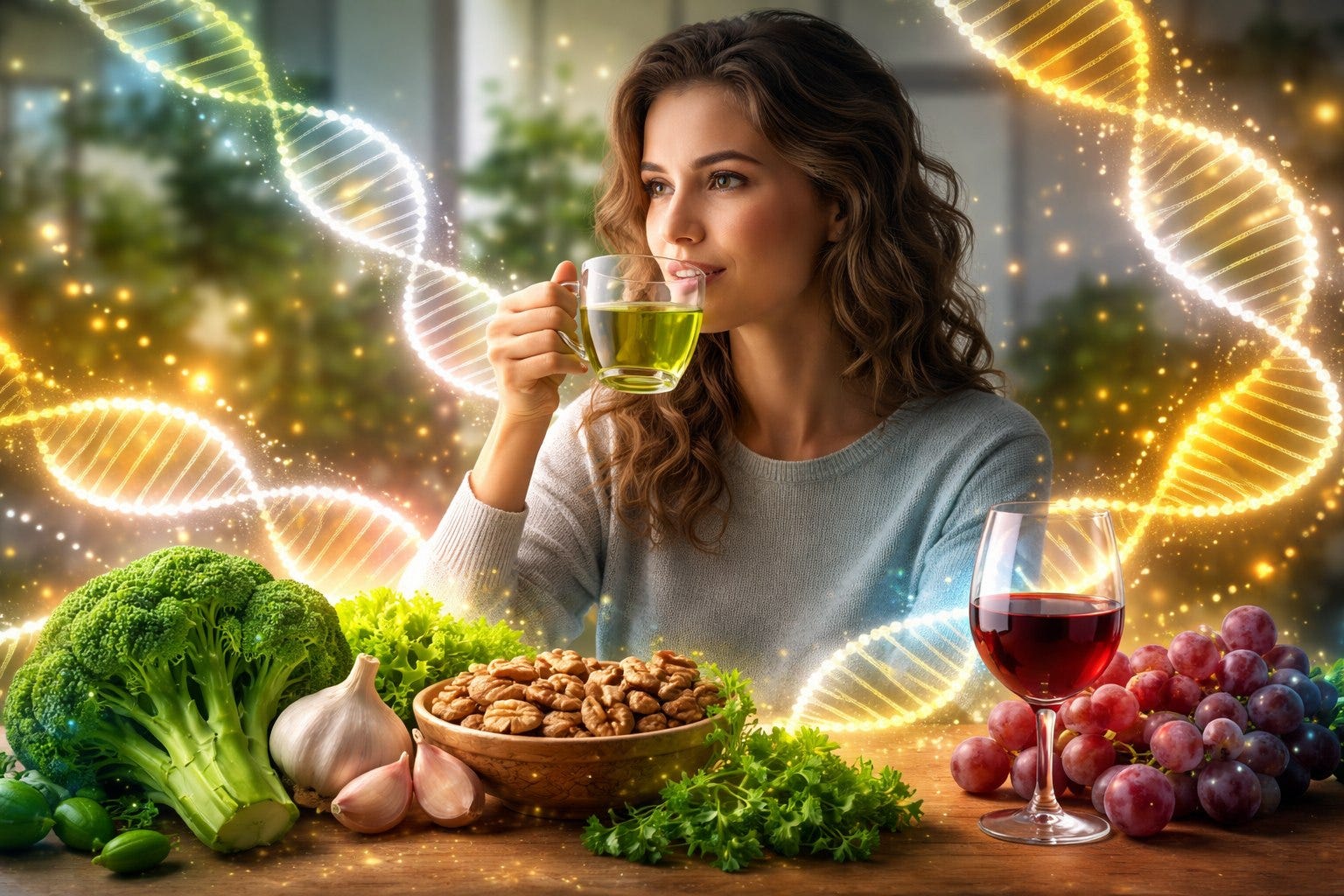
Imagine if your lunch could whisper in your genome’s ear — nudging, coaxing, and sometimes even silencing a gene here and there. It sounds like sci-fi, but it’s real science: the cutting-edge world of nutrigenomics and nutriepigenomics — the study of how what you eat influences the expression of your genes and shapes your long-term health. 📡🍎
Every bite you take isn’t just fuel — it’s information. Nutrients and bioactive compounds in food can tweak genetic activity, modify epigenetic marks, and alter the way your body behaves at a molecular level. This doesn’t change your DNA sequence, but it does change how your genes behave — like how a conductor shapes the music without rewriting the score. 🧬🎼
Ready to meet five foods that might be having a very serious conversation with your genome?
🥦 1. Broccoli & Other Cruciferous Vegetables — Nature’s Genetic Modulators
Broccoli isn’t just a side dish. It’s packed with sulforaphane, a bioactive compound that has earned a reputation for its impact on gene expression and epigenetic processes. Sulforaphane influences pathways involved in detoxification and inflammation while shaping histone modifications — the chemical tags that help determine whether genes are active or silent.
👉 What makes cruciferous veggies so fascinating is their ability to act like tiny genome whisperers. By affecting how DNA is packaged and read, they might help upregulate genes that protect cells — and downregulate ones that fuel chronic inflammation. Salads never felt so powerful.
🍵 2. Green Tea — The Antioxidant That Tunes Your Genetic Orchestra
Sip your green tea as if it were a secret message for your DNA — because in a way, it is. Green tea is rich in epigallocatechin gallate (EGCG), a polyphenol that interacts with epigenetic machinery like DNA methyltransferases and histone deacetylases. These are the enzymes that choreograph how tightly DNA is wound — and whether a gene is “on” or “off.”
This makes green tea much more than a calming ritual: it’s a biochemical signal that may enhance antioxidant defenses, calm inflammatory pathways, and support cellular health through gene-level tweaks. 🌱🍵
🧄 3. Garlic — The Flavor Bomb With Genetic Sway
Garlic isn’t shy on the dinner plate, and it’s equally bold in its biochemical impact. Compounds like diallyl disulfide (found in garlic) can modulate gene expression by influencing epigenetic marks and signaling pathways related to detoxification and cellular defense.
Beyond its well-known cardiovascular benefits, garlic might also help nudge key genes involved in inflammation and immune responses. In short, your kitchen becomes a molecular workshop. 🧄🛠️
🍷 4. Red Wine (in Moderation) — Toast to Gene Interaction
Here’s where things get fancy: resveratrol, a polyphenol found in red wine, isn’t just a party trick. It engages with your genetic regulators, particularly sirtuins, a family of enzymes involved in metabolism, cell survival, and longevity. 🍇🍷
In laboratory studies, resveratrol has been shown to influence gene pathways linked to oxidative stress and mitochondrial function — the powerhouse dynamics of your cells. Is that a reason to open a bottle? Perfectly arguable. (Just don’t overdo it — moderation is key.)
🥜 5. Walnuts — Tiny Neuro-Nutri Genomic Gems
Let’s get walnutty. Research indicates that walnut consumption can alter gene expression in ways linked to cell growth, apoptosis (programmed cell death), and inflammation. For instance, a clinical research trial found that walnut intake influenced the expression of hundreds of genes in breast tumor tissue in directions associated with slower tumor progression. 🍽️🧬
Walnuts are rich in omega-3 fatty acids and antioxidants — both of which convey signals to your genome that may promote healthy metabolic responses and reduce inflammatory stress.
🧠 So What’s Going On Here? The Science in a Nutshell
At the heart of all this is a central truth: your diet doesn’t just feed your body — it programs the way your genes behave. Nutrients and bioactive compounds interact with the epigenome, the layer of chemical switches that controls gene activity without altering the DNA sequence itself.
This is why nutrigenomics is such a hot field. It’s rewriting how we think about nutrition — not as a static set of calories and macros, but as a dynamic conversation between food and the molecular architecture of life itself. 🧬📡
👉 Think of it as “food as information,” not just energy.
Also read: 6 Foods Longevity Scientists Eat Every Week (And Why You Should Too)
🍽️ Real Talk: Can Food Really Rewrite Your Genetic Future?
Yes... but gently. This isn’t about rewriting your DNA code (that’s fixed at birth), but tuning how your genes express themselves — like adjusting the settings on a stereo. Genes that promote inflammation might quiet down. Genes that support repair and resilience might get louder. And while each person’s genetic makeup influences how strong these effects are, the message from science is clear: diet matters — literally at the molecular level.
So here’s your challenge:
✨ What small food swap can you make today that might help your genes sing a healthier tune?
🍽️ Ready for a Taste of Precision Nutrition?
Whether you’re a wellness explorer or just someone who likes to eat, understanding how food interacts with your genes opens an exciting doorway. Curious about how your own DNA responds to food? Personalized nutrigenomic testing might be next on your list.
💬 What food do you think talks to your genes the loudest? Let’s swap ideas below! 👇