

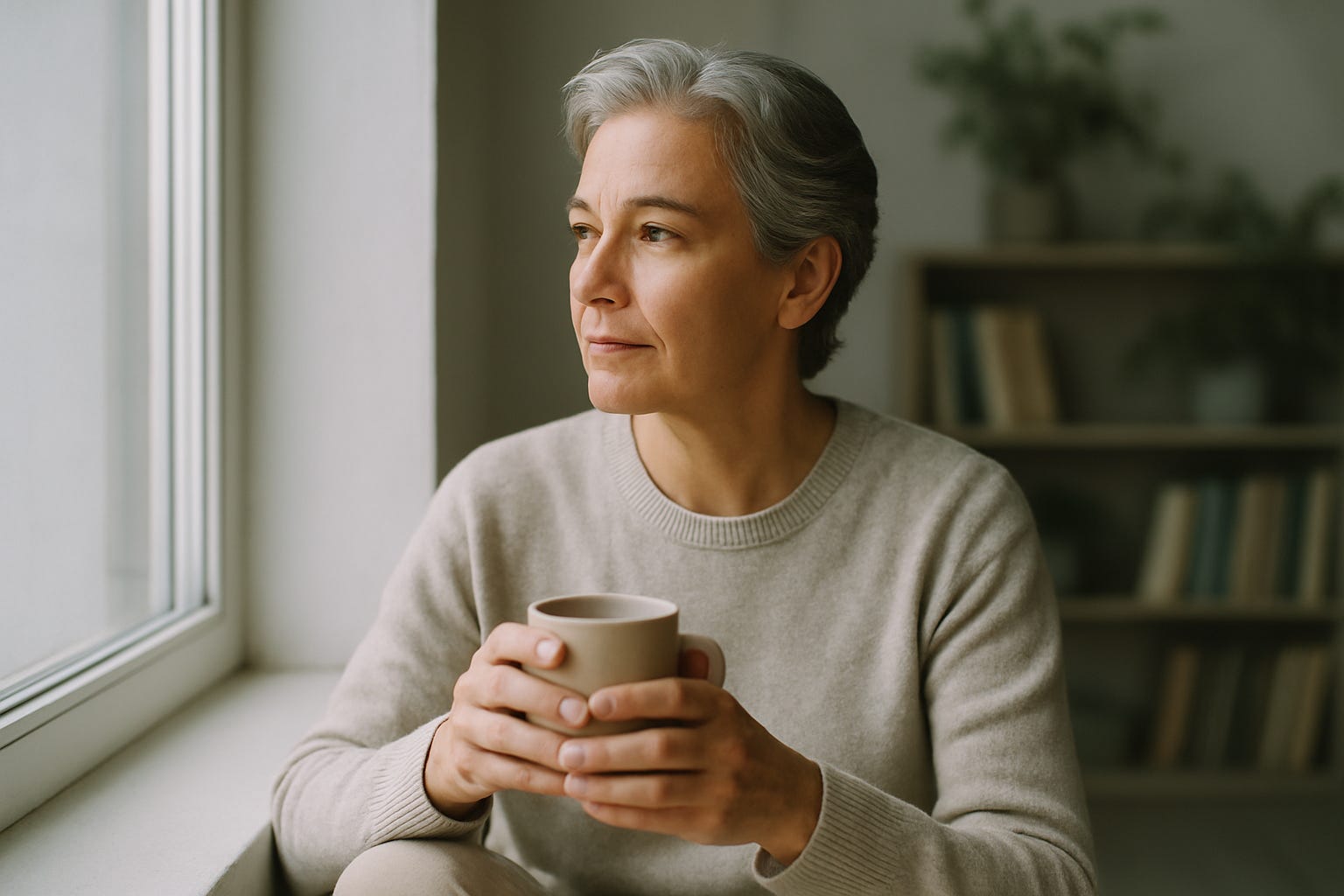
Nobody stumbles into their hundredth birthday by accident. The centenarians and near-centenarians who catch the attention of researchers have, obviously, gotten lucky with their genes to some degree. But genetics accounts for only about 20–30% of longevity variance in most major studies. The other 70–80% is lifestyle, environment, and — this is the part that keeps getting underappreciated — mindset.
That word gets a bad rap. It sounds like a motivational poster, something to be cross-stitched and framed. But the research here is real, specific, and increasingly hard to dismiss. How you think about aging, stress, purpose, and social connection isn’t just philosophically important. It measurably changes your biology. It shows up in your immune markers, your cardiovascular outcomes, and your pace of epigenetic aging. In other words, your mental model of what it means to grow old is partly writing the script your body follows.
The five shifts below aren’t feel-good theory. Each one has a documented physiological mechanism. And while none of them requires a supplement, a cold plunge, or a $500 wearable, all of them take genuine work. That, I think, is why we don’t talk about them as much as we should.
Shift 1: treating purpose as a health intervention, not a luxury 🌱
Ask a centenarian in Okinawa what keeps them going and they won’t mention their cholesterol panel. They’ll tell you about their ikigai — a Japanese word roughly meaning “reason for getting up in the morning.” The Okinawans and the Nicoyans of Costa Rica (who call their version plan de vida) both structure daily life around this concept, and Blue Zone research compiled by Dan Buettner suggests that a clear sense of purpose adds up to 7 years of extra life expectancy compared to people who lack one.
This isn’t inspirational math. A major prospective cohort study called the Ohsaki Study followed 43,391 Japanese adults and found that those without a sense of ikigai faced significantly higher all-cause mortality, with the increase driven primarily by cardiovascular disease. A 2025 scoping review published in Lifestyle Medicine confirmed these findings across 86 articles, identifying ikigai as meaningfully associated with:
Lower rates of depression and cardiovascular mortality
Greater social participation and physical capability in older adults
Reduced stress and higher general well-being scores
A protective effect specifically for cancer survivors
And crucially, ikigai isn’t reserved for people whose lives look impressive on a resume. A 2025 Harvard study found that both optimism and purpose in life are associated with healthier immune aging — specifically, higher proportions of naive T-cells and lower inflammatory markers, which means your immune system stays more capable of fighting new threats rather than burning itself out on chronic inflammation 🔬.
The shift: stop treating purpose as something to find and start treating it as something to build. Ask what you’re good at, what you enjoy, and what feels genuinely useful. The exact form is secondary. The daily, motivating reason to show up is what does the biological work.
Shift 2: the optimism effect is real, and it’s not about pretending 💡
Harvard researchers analyzed data from two major longitudinal studies covering roughly 70,000 women and 1,400 men and published the results in Proceedings of the National Academy of Sciences. The finding: the most optimistic individuals had, on average, an 11 to 15% longer lifespan than the least optimistic, and were 50 to 70% more likely to reach age 85. This held after controlling for chronic conditions, health behaviors, income, and depression.
The study has been criticized, fairly, for having a largely white, higher-income sample. But a subsequent study using the Women’s Health Initiative — which included Hispanic, Latina, and Asian women alongside non-Hispanic White and Black women — replicated the core finding across all racial and ethnic groups.
A meta-analysis of 15 studies by Alan Rozanski, a cardiologist at Mount Sinai, covering 229,391 participants, found that higher optimism predicted a 35% lower risk of cardiovascular events. Optimistic women in a separate Harvard study had a 38% lower risk of dying from heart disease, 39% lower from stroke, and 52% lower from infection. Those are numbers a drug company would put on a billboard.
The mechanism isn’t magic. Optimistic people:
Tend to engage in health-promoting behaviors more consistently
Recover faster from stressful events without prolonged cortisol activation
Have lower systemic inflammation as measured by CRP and IL-6
Are more likely to seek medical help early and adhere to treatment
What the shift actually involves: optimism is partly heritable (studies suggest 23–32%), but it’s also trainable through cognitive-behavioral strategies and writing exercises, as multiple experimental trials have demonstrated. The practice of imagining a realistic “best possible future self” for 15–20 minutes a few times a week shows measurable effects in controlled trials. Not positive thinking in the denial sense — more like deliberately practicing forward-looking attention over backward-looking rumination. Have you ever noticed which direction your default mental attention tends to flow? 🧠
Shift 3: believing you’re aging well literally slows how fast you age 🧬
Yale professor Dr. Becca Levy spent decades studying what happens when people hold negative versus positive beliefs about aging — and the results are uncomfortable reading for anyone who casually says things like “I’m getting old” or “it’s all downhill from here.”
Her landmark research, drawn from the Ohio Longitudinal Study of Aging and Retirement tracking 660 people over 23 years, found that older individuals with more positive self-perceptions of aging lived an average of 7.5 years longer than those with negative self-perceptions. The gap remained after controlling for age, sex, socioeconomic status, loneliness, and existing functional health. It’s documented in her book Breaking the Age Code along with implications for conditions like memory loss and cardiovascular disease that we typically attribute purely to biology.
The mechanism appears to involve the will to live and health-behavior engagement: people with negative aging beliefs tend to take fewer health-protective actions, comply less with medical advice, and respond worse to stress. People with positive aging beliefs behave as though their future is worth investing in — because in their minds, it actually is.
This connects directly to a separate body of research on stress and biological aging. A Duke University study using the Dunedin Longitudinal cohort found that perceived stress was associated with accelerated biological aging at a magnitude comparable to smoking and low education. The key word is perceived. The same life events hit different people differently depending on how they interpret and frame them — and those interpretations track with epigenetic age acceleration:
High perceived stress predicted faster DunedinPACE aging scores
Emotion regulation ability moderated the relationship between stress and GrimAge acceleration
People with strong self-control had a blunted insulin-resistance response to cumulative stress
The association between stressful life events and faster aging was weaker in people with higher psychological resilience
The shift: your inner monologue about aging isn’t harmless background noise. It’s data your cells are reading. 💊
Shift 4: treating relationships as medicine, not social maintenance 🤝
The WHO Commission on Social Connection released a major report in 2025 estimating that loneliness contributes to 871,000 deaths globally each year, with documented links to cardiovascular disease, type 2 diabetes, cognitive decline, and early mortality. A comprehensive 2025 meta-analysis covering more than 100,000 older adults found that social isolation increased all-cause mortality risk by 35% (HR 1.35), while loneliness increased it by 14%. Living alone raised it by 21%. These effects are, in some cases, comparable to or exceeding the health risks of smoking and obesity.
The biological path is fairly well mapped at this point. Socially isolated people show:
Consistently elevated C-reactive protein (CRP), a systemic inflammation marker
Higher interleukin-6 (IL-6) levels, which accelerate cellular aging
Elevated and prolonged cortisol responses to stress
Faster cognitive decline and a higher dementia risk
What consistently separates exceptional longevity populations — as Harvard Medical School researchers who analyzed the characteristics of Blue Zone communities confirmed — is not that they make time for socializing. It’s that their social connection is embedded in the structure of daily life. Sardinian men walk together daily. Okinawans maintain their moai, a committed lifelong social group. Seventh-Day Adventists in Loma Linda, California, attend services with a faith community. Dan Buettner has noted that of the 263 centenarians he interviewed over his career, all but five belonged to a faith-based community, and that this attendance correlates with four to fourteen years of additional life expectancy.
The shift isn’t “schedule more dinners.” It’s a deeper reframe: treat your relationships with the same intentional investment you’d give a training program or a diet. This is arguably the most underdiscussed longevity lever among health-conscious people who spend significant energy optimizing sleep but very little engineering daily social structure. If you’re reading this, honestly: when did you last deepen a friendship rather than just maintain one? 🌍
Shift 5: resilience as a practice, not a personality trait ⚡
Duke University researcher Dr. Yi Zeng, drawing from the Chinese Longitudinal Healthy Longevity Survey — one of the largest centenarian datasets ever assembled — found that after controlling for physical health and cognitive status, centenarians were significantly more resilient than any other old-age group. More striking: nonagenarians aged 94–98 with better resilience had a 43.1% higher likelihood of becoming a centenarian than those with lower resilience. Resilience wasn’t a passive result of good fortune. It was a predictor that showed up before the outcome.
What does this look like in practice? The centenarians in most major studies aren’t people who never suffered. They’re people who suffered and adapted. A 2025 NPR survey of hundreds of centenarians found that 85% said they found it easy to laugh and maintain a sense of humor despite age-related losses, illness, and the deaths of people they loved. One participant said longevity was simply about “being able to do the things that make me happy without feeling worn out.” That low-key framing is itself a resilience marker — the ability to recalibrate expectations without bitterness.
Research from a study published in Psychological and Biological Resilience found that emotion regulation ability moderates the epigenetic damage caused by cumulative stress. With worse emotion regulation, stress predicted meaningful GrimAge acceleration. With stronger emotion regulation, the effect of stress on biological aging essentially disappeared. This is a remarkable finding: psychological skill literally buffered a DNA-level outcome.
Building resilience isn’t about becoming impervious to difficulty. The practices that seem to shift the needle include:
Regular exposure to mild stressors with recovery (zone 2 cardio, cold exposure, brief fasting — all of which the LongevityHub biohacking guide covers in practical detail)
Developing a narrative of growth from past hardships rather than a narrative of victimhood, which has documented associations with lower inflammatory markers
Social support networks that provide genuine emotional processing, not just company
Specific emotion-regulation practices such as mindfulness-based stress reduction, which multiple trials have shown to reduce cortisol reactivity and slow biological aging markers
The shift: resilience is a skill with a training protocol, not a fixed feature of your character. The centenarians who keep appearing in longevity research aren’t extraordinary humans. They’re ordinary humans who built, over a long period, an extraordinary capacity to bounce back — and apparently their epigenome noticed.
The most interesting thing about all five of these shifts is how radically different they are from the conversation most people have about longevity. We talk about supplements, sleep scores, VO2 max, and which biomarkers to track. As the LongevityHub guide to longevity biomarkers makes clear, those numbers do matter. But the research on mindset, purpose, and social connection suggests we’re missing at least half the picture when we frame longevity purely as a biological optimization problem.
The question worth sitting with: of these five shifts, which one are you most likely to rationalize as someone else’s problem?