

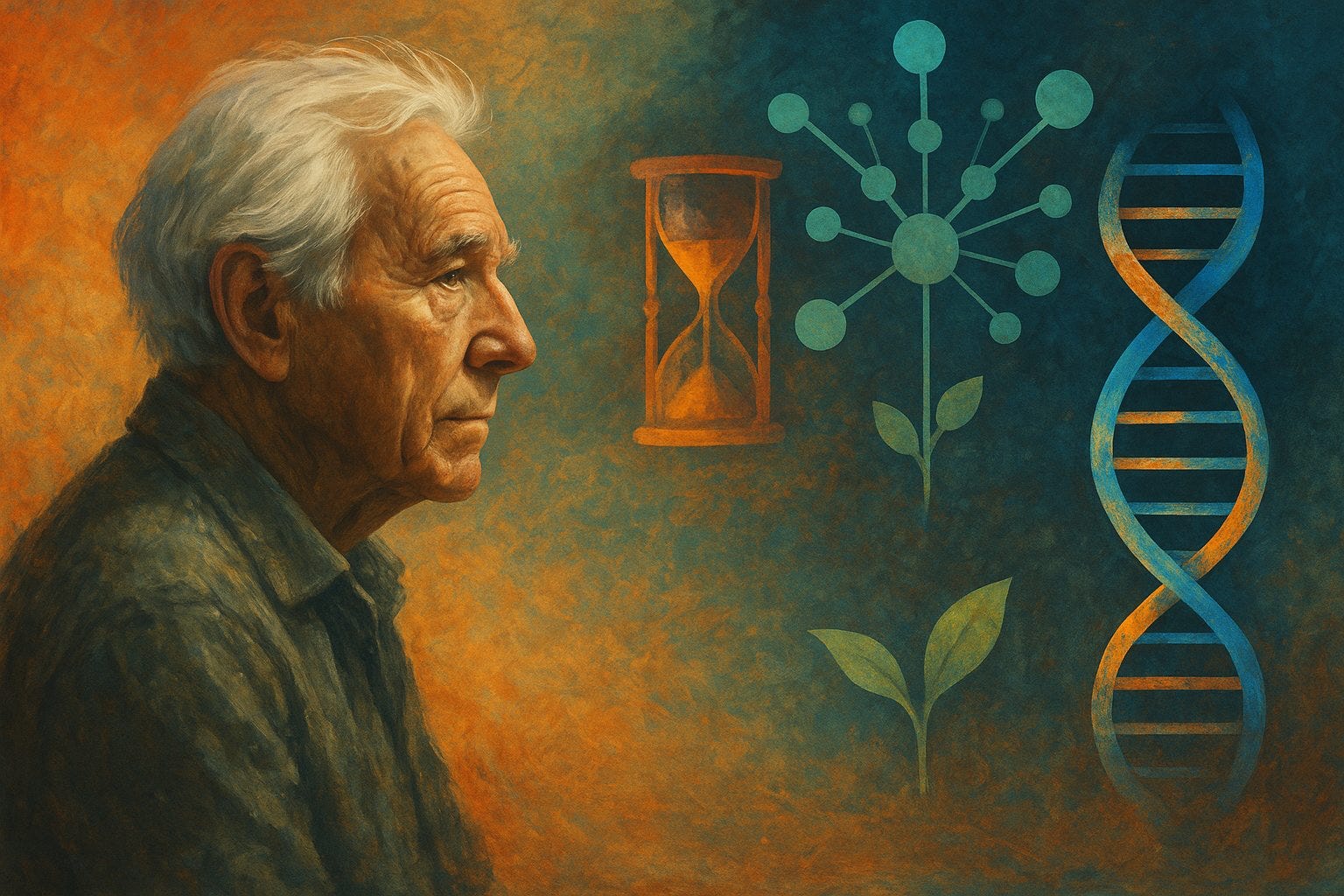
Every year, the frontiers of longevity science ripple with discoveries that feel like whispers of magic — until they’re not. In 2025, a flurry of new research, drug candidates, and clever biotech moves quietly shifted the baseline of what “aging gracefully” might really mean. Some breakthroughs are murky and modest. Others? Bold enough to make you double-take. If you blinked this year, you might’ve missed half of them. Let’s catch you up — with optimism, nuance, and a dash of healthy skepticism.
Why 2025 Feels Different
For decades, anti-aging efforts hovered at the edges of plausibility — lifestyle tweaks, vague promises. But lately, something changed. Scientists are no longer just hypothesizing: they’re building. New tools like AI-powered drug screening, multi-omics analysis, and deeper cellular insights are revealing aging as a biological process — not just fate.
At the same time, the mindset is shifting. The question is no longer “Can we cheat death?” but “Can we extend healthy, vibrant years?”
And for once — feeling a little less like science fiction.
🧬 Breakthrough 1: Gene Therapy Gets Real
One of the most exciting headlines from 2025: researchers demonstrated that boosting a naturally occurring protein in mammals can significantly extend lifespan and vitality.
Simultaneously, biotech firm Life Biosciences — co-founded by a prominent aging researcher — announced that it will begin human trials in 2026 of a therapy designed to “rejuvenate” cells without altering their core identity.
This isn’t snake-oil. It’s molecular reprogramming — rewriting parts of the cell’s stylebook so it behaves younger. If it works, it could tackle not just wrinkles, but serious age-related diseases like Alzheimer’s, diabetes, or heart disease.
🧪 Breakthrough 2: AI-Driven Discovery of Anti-Aging Drugs
Remember when drug discovery felt random and slow? AI is changing the game. A 2025 study from Scripps Research and Gero used machine learning to screen thousands of compounds — and identified several that extend life in model organisms (like worms). Over 70% of their top “hits” meaningfully increased lifespan.
In parallel, a network-medicine approach that maps thousands of genes related to aging highlighted existing, safe compounds that could modulate aging pathways.
In short: AI is turning “maybe someday there will be a pill” into “here are candidate molecules ready for testing.”
🐭 Breakthrough 3: Lab Mice Are Living (and Feeling) Younger
It still feels like sci-fi — but in 2025, a few treatments delivered impressive results in rodents. One study showed that combining a hormone (Oxytocin) with a small-molecule inhibitor significantly extended lifespan in elderly male mice — by over 70%. Healthspan improved, too.
Meanwhile, regenerating cells via gene therapy extended lifespan by up to 20% in mammals — hinting at deep biological shifts, not just surface-level youth tricks.
Yes, mice are not humans. But these experiments anchor hope: aging might be a process we can slow.
🧠 Breakthrough 4: Aging Clocks & Personalized Healthspan Maps
Aging isn’t uniform. Two 60-year-olds could differ biologically by decades. That’s why tools that measure “biological age” — not just chronological age — are critical. In 2025, researchers unveiled multi-omics aging clocks that integrate data from DNA, metabolism, microbiome, and more to predict future disease risk and mortality.
Why this matters: with precise biomarkers, you don’t need to guess if a treatment works. You can track the result. Clinicians and longevity-focused clinics are embracing this to monitor long-term trends.
This makes aging feel manageable — not a decay, but a trajectory we might steer.
🧬 Breakthrough 5: Repurposed Molecules and Supplement Tweaks
Not every breakthrough requires novel gene therapy or robotics. Some might come from re-thinking simple compounds we already know. A 2025 review of decades’ worth of preclinical studies found that one of the most consistent longevity boosters is Rapamycin — a compound originally discovered in soil bacteria.
At the same time, a growing number of researchers now question whether old favorites (like Metformin) will deliver meaningful anti-aging benefits; a newly published 2025 study highlighted strengths, but also significant weaknesses.
The takeaway: longevity might come from clever science — or from rethinking what’s already on our shelf.
🌿 Breakthrough 6: Redefining Aging — It’s a Disease, Not Destiny
Perhaps the biggest shift of all isn’t in labs, but in thinking. At the 2025 Progress Conference 2025, researchers and thinkers argued that aging should be treated as a disease of sorts — not a moral failing or inevitable decline.
Why that matters: this framework opens up regulatory, clinical, and ethical paths to treat aging holistically — not piece by piece. Once aging itself becomes a target, therapies, public health policies, and investment flow differently.
It changes the narrative. Aging becomes a public-health challenge, not an unavoidable fate.
What This All Means for You (Yes — You)
You might not sprout a silver mane of youth tomorrow. But over the next 5–10 years, the science of aging is poised to move from “cool lab experiments” to “real human therapies.”
If you’re somewhere between 35 and 65, these breakthroughs could influence your retirement, healthspan, and wellness decades down the line.
As a writer interested in longevity (hi, that’s you), you’re staring at a gold mine of content potential — trend analyses, ethical debates, human stories, hype vs. reality.
Ask yourself: If “living longer” becomes feasible for many — what changes? Society, economies, how we define old age, how we appreciate youth. It’s not just science. It’s a paradigm shift.
Also read: 7 Breakthrough Papers in Aging Science You Can Actually Understand
Final Thought
So yes — 2025 delivers. A symphony of small breakthroughs, quiet achievements, and paradigm shifts converge — and they might change aging forever. Maybe human beings will not all live to 150. But living to 100, with health, energy, and clarity? That no longer sounds crazy.
Yielding to hope, not hype.
Because rejuvenation — in 2025 — feels a little less like myth … and a little more like the next chapter.