

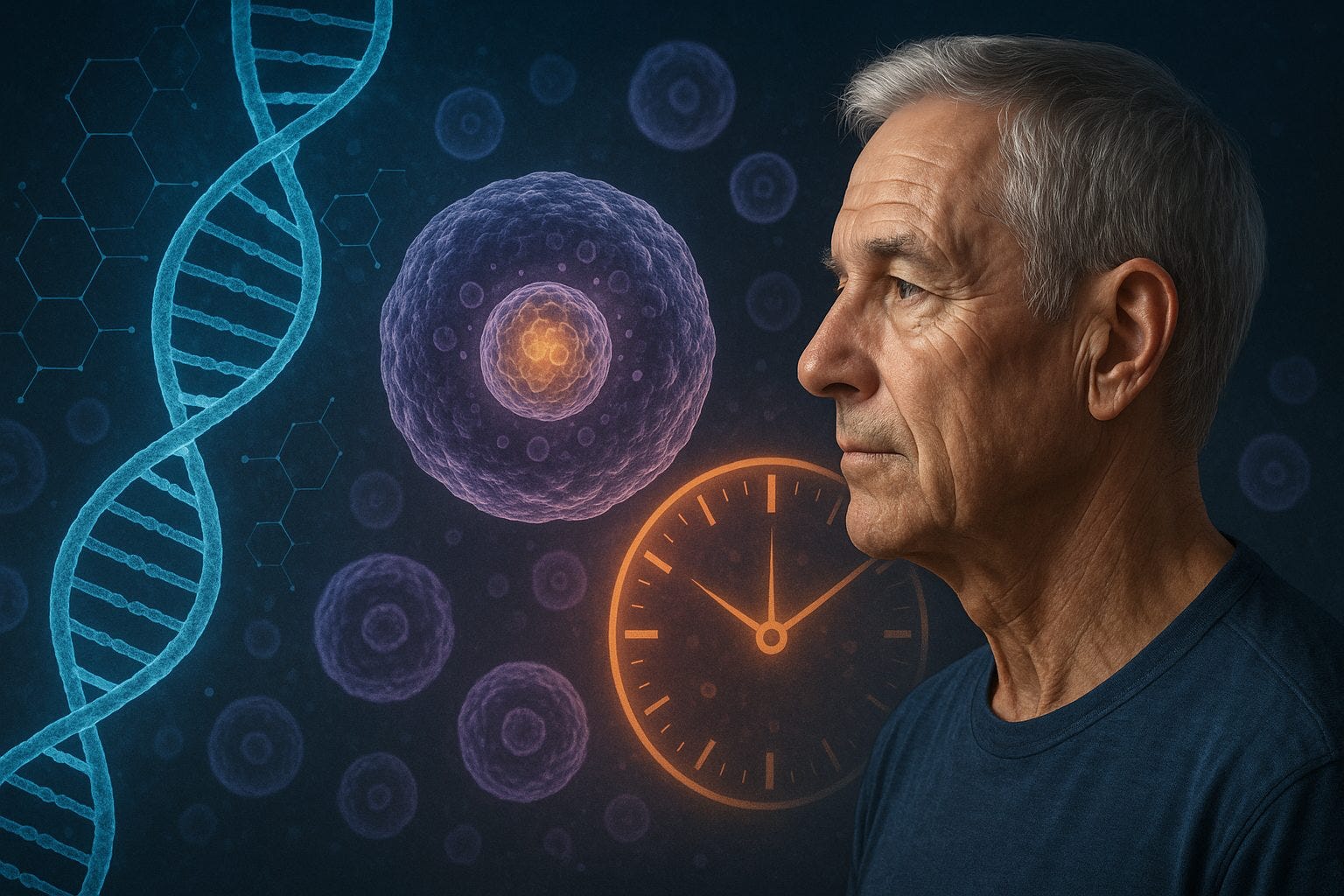
We’re all used to celebrating birthdays — that magical moment when you add one more candle to your cake. But chronological age (how many years since you were born) doesn’t tell the full story. What really matters — if you care about longevity, vitality, and staying sharp — is your biological age: how “old” your cells, organs, and overall physiology actually are.
Biological age gives a richer, deeper snapshot of your health. It’s shaped by lifestyle, environment, genetics, and the wear-and-tear (or upkeep) your body experiences. 🔬 It can diverge from calendar years in meaningful ways: two people both 50 years old chronologically might have biological ages of 45 and 60, respectively. And that gap might predict long-term health, disease risk, and how well you age.
Enter a new generation of digital and lab-based tools — some pricey, some free — that give you insight into your body’s “real” age. Some even offer actionable advice to help you slow, or perhaps reverse, the clock.
Here are 7 of the most interesting ones I’d bet on if I were you (with wit, science, and maybe a smidge of healthy paranoia).
1. Epigenetic Clocks via DNA Methylation (The “Gold Standard”)
At the molecular level: your DNA accumulates tiny chemical changes over time. These changes — especially DNA methylation at CpG sites — tend to follow predictable patterns. Scientists translated those patterns into algorithms called epigenetic clocks.
Some of the most used clocks:
Horvath clock — uses 353 CpG markers; works across many tissue types.
PhenoAge — integrates methylation + clinical biomarker data for a more health-outcome–focused age prediction.
GrimAge — designed to predict mortality and long-term health risks.
These clocks remain the most robust, validated predictors of biological age — used widely in research and increasingly available via commercial tests.
That said: epigenetic clocks are not perfect. A 2024 study from the Spanish National Cancer Research Centre (CNIO) found that many “off-the-shelf” clocks may produce age estimates differing by up to 25 years depending on the DNA-chip technology used.
So — treat them as powerful deep diagnostics. Not magic mirrors.
2. At-Home Biological Age Tests (Blood, Saliva & Home Kits)
If you don’t want lab visits, some companies package epigenetic testing into mail-in kits. You swab, pee, or give a small blood sample — they analyze, and you get your biological age (and usually a report).
SystemAge — claimed 99% accuracy, tested on 1,600+ cases.
AgeRate — runs DNA methylation analysis from a small blood test and delivers actionable longevity insights.
Elysium Health’s biological age kit — offers a multi-dimension snapshot of aging, covering different systems.
Pros: Lower barrier to entry; good for tracking changes over time; often includes personalized feedback.
Cons: Still limited by the accuracy of methylation clocks, which — as noted — can vary depending on lab methodology.
3. Lifestyle + Biomarker-Based Digital Clocks (No DNA Needed)
Not everyone wants DNA testing. Some tools estimate biological age using “down-to-earth” data: blood tests, clinical biomarkers, lifestyle info (sleep, diet, activity), even basic questionnaires.
NOVOS Age — offers an app + optional blood-kit combo. On its own, uses a detailed lifestyle questionnaire to estimate your “age” across body functions (heart, metabolic health, inflammation, etc.).
AgelessRx Biological Age Calculator — simple, survey-based calculator where you plug in lab values or lifestyle details and get a biological age estimate.
These are not as precise as methylation clocks — but they’re cheap, fast, and often enough to get a rough baseline. Good for early adopters or those curious about where they stand.
4. AI-powered “Non-Methylation” Clocks — From Skin, Sleep, Wearables
Now we’re entering the realm of sci-fi-meets-biorhythms. Researchers are developing clocks that draw on data like facial features, sleep patterns, activity rhythms, even metabolomic or proteomic markers — no intrusive blood draw required.
FaceAge — uses skin biomarkers to estimate biological age and suggest personalized skincare or wellness routines.
CosinorAge — a state-of-the-art (2025) open-source platform that analyzes wearable data (sleep, activity, circadian rhythms) to estimate biological age.
These clocks are trendy, low-friction, and potentially scalable. But — and it’s a big but — they’re still early stage. Questions remain around accuracy, reproducibility, and clinical relevance. Researchers currently treat them as experimental tools, not medical advice.
5. Why It Makes Sense to Track Biological Age (Beyond Vanity)
Because aging isn’t just about wrinkles or hair color. Biological age gives a more nuanced view of how your body is doing — how well your repair systems are working, how gracefully your metabolism, immune system, and other organs are holding up.
It helps detect accelerated aging early — before diseases show up.
It provides a baseline to monitor interventions (diet changes, exercise, sleep optimization, lifestyle shifts). If your “age” goes down (or up slowly), that’s a win. Some studies even use these clocks to assess wellness or anti-aging programs.
It fuels personalized health strategy — instead of generic advice, you can tweak what works for you, and measure real impact.
Think of it as a progress bar — not for social media, but for your body.
6. Important Caveats — Because Science Is Messy
I’m bullish on biological-age tracking. But I’m also realistic.
Not all clocks are equal. Some (especially older or cheaper methylation clocks) may give inconsistent results — lab method, tissue type, even which “chip” was used matters.
Biological age is multi-dimensional. Methylation data might reflect “cellular age,” but not necessarily organ-specific damage, lifestyle stressors, or metabolic problems. Many researchers argue for a multi-omics approach (methylation + proteomics + metabolomics + clinical data) for a truly holistic view.
These tools give probabilistic insights, not certainties. It’s useful to know you’re aging “faster than normal,” but that doesn’t guarantee disease — just as looking younger doesn’t guarantee health.
In short: treat the results as guidance, not gospel.
7. My Pick: How I’d Use These Tools (If I Were You)
If I were building my own longevity playbook — like I often do for my tech-obsessed clients and friends — here’s how I’d layer these tools:
Start with an epigenetic kit (e.g., Elysium or AgeRate) — get a “true age” baseline.
Use a questionnaire-based app (NOVOS or similar) every 6-12 months to track lifestyle-driven changes.
If I’m into wearables and quantified self, add something like CosinorAge — especially to monitor sleep, activity, and circadian rhythm impacts.
Combine with good habits: nutrition, exercise, stress management, sleep, mental wellness. Check clocks again after a season or two.
Because the biggest lever on your aging clock isn’t a pill — it’s habits. Always.
Final Thoughts
Biological age tracking isn’t sorcery. It’s data. A flashlight — not a wand — that helps you see where your body really stands. Sometimes the light’s harsh. Sometimes the numbers sting. But better to know than to guess.
If you’re curious — or ambitious — grab one of these tests. Do some lifestyle experiments. See what happens. Your future self might thank you.
After all: Time flows. We just get to choose how gracefully we ride the current.