

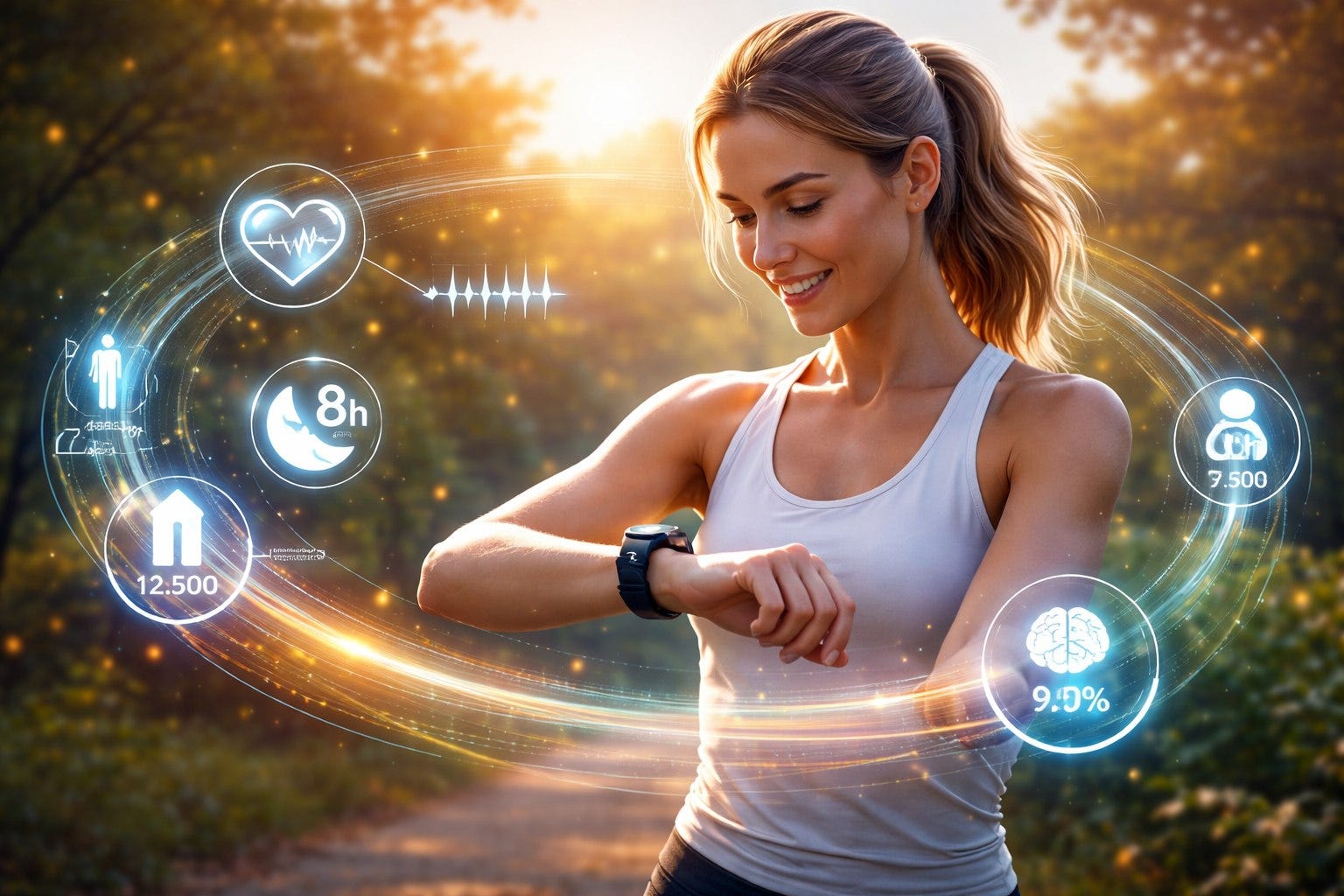
Imagine this: a small ring on your finger or a sleek watch on your wrist is quietly rewriting the story of your health — nudging you toward better sleep, smarter workouts, and faster responses to trouble. That’s not sci-fi. It’s wearable tech in 2026 — subtle, affordable, and life-altering. 🧠⌚💪
Wearable devices are no longer just flashy fitness bling. They’re sophisticated health partners, continuously collecting data about your body and behavior, and turning that data into life-enhancing insight. Most of the time, you don’t even notice they’re working — until, suddenly, you realize your habits are healthier, your doctor is impressed, and hey… you feel younger. Here’s how.
1. Continuous Vital Monitoring — Your Personal Health Radar
You’re not just counting steps anymore. Modern wearables continuously track heart rate, oxygen levels, sleep, stress, movement patterns, and more — all in real time, around the clock. 📈💕 That constant vigilance creates a living picture of your health, letting trends emerge long before symptoms show up in the clinic.
This constant vigilance matters. For example, wearable tools are now used in clinical settings to spot early postsurgical complications in children by analyzing subtle changes in heart rate and activity patterns — often before parents or doctors notice anything off.
This is what I think is most exciting: instead of waiting for a doctor visit once a year, your wearable is quietly watching for changes every day, so you can catch trouble early — and early detection often means easier treatment, fewer emergencies, and a longer, healthier life. 🩺
2. Behavior Change — Tiny Nudges, Big Results
Let’s be real — most of us don’t want a lecture about health habits. But wearables don’t nag. They nudge. A gentle buzz when you’ve been sedentary too long. A celebratory confetti animation when you crush your step goal. 🎉
This kind of behavior reinforcement is powerful. Research shows that wearables don’t just measure metrics — they help shape habits when paired with smart feedback and reminders.
A device doesn’t force good habits — it makes them easier to adopt. That means more movement, better sleep awareness, and heightened mindfulness about your body’s needs. Over time? That’s how health span — the years you remain active and independent — stretches out. 📅✨
3. Chronic Condition Management — Proactive, Not Reactive
One of the most life-changing benefits of wearables is their ability to manage chronic diseases before they escalate. Think about diabetes, hypertension, or irregular heart rhythms — conditions that can sneak up silently and devastate quality of life.
Wearables help people track these conditions continuously, giving medical providers near-real-time insight into your health. This reduces emergency visits, cuts healthcare costs, and empowers users to adjust lifestyle or medications with confidence rather than guesswork.
I think it’s fair to say: a wearable is like having a mini health clinic in your pocket — checking in on you every hour of every day without judgment. 🩹📲
4. Early Detection of Serious Issues — The Preventive Powerhouse
What if your watch could quietly alert you to a problem? Well, it can — and often does. Many wearables today can flag irregular heart rhythms, hinting at conditions like atrial fibrillation before they cause a crisis.
That’s not just cool. That’s life-saving.
When irregular patterns are spotted early, you’re more likely to get medical help before a minor issue becomes a full-blown emergency. This kind of proactive alerting — powered by sensors and AI — turns your wearable into an early warning system. 🚨
5. Sleep Tracking — Because Rest Is Biology’s Best Friend
You need good sleep. Like water needs a riverbed. 🌙💤
Yet most of us don’t know how well we actually sleep. Wearables changed that by tracking sleep duration, sleep stages, and disruptions, then translating this into actionable insights.
Better sleep isn’t just about feeling rested — it’s tied to hormone regulation, immune function, mental clarity, and long-term metabolic health. So when your wearable tells you to wind down earlier, it’s not being bossy — it’s helping you live longer. 😉
6. Stress and Mental Well-Being Monitoring — Hidden Lifesavers
Longevity isn’t just about cardio and calories — it’s also about mental resilience. Wearables now measure physiological stress signals like heart rate variability (HRV), giving you a window into your internal state long before burnout hits.
By making you aware of stress patterns and offering suggestions — a breathing break here, a meditation prompt there — wearables help you manage mental health the same way they optimize physical health.
And trust me: stress reduction is longevity gold. Less chronic inflammation. Better immune response. Healthier heart. It all adds up.
7. Personalized Feedback — Your Health, Tailored
The beauty of wearables is not just data collection — it’s interpretation. Today’s wearables use AI to turn raw metrics into insights: what your resting heart rate trend really means, whether your sleep patterns are healthy, or whether it’s time to push harder (or rest).
This personalization transforms generic advice into your advice.
Instead of some generic “do more steps,” you might get: “Your HRV suggests you need recovery today. Try gentle stretching.”
That feels personal — and it works.
Also read: 6 Wearables That Track Your Biological Age (and How To Use Them Wisely)
Final Thoughts
Wearable tech isn’t a magic potion — it’s a mirror with superpowers. It reflects not just where you are, but where your health trajectory is headed. And when used wisely, it nudges you — daily, almost imperceptibly — toward better decisions, earlier interventions, and a longer, healthier life. 🧬✨