

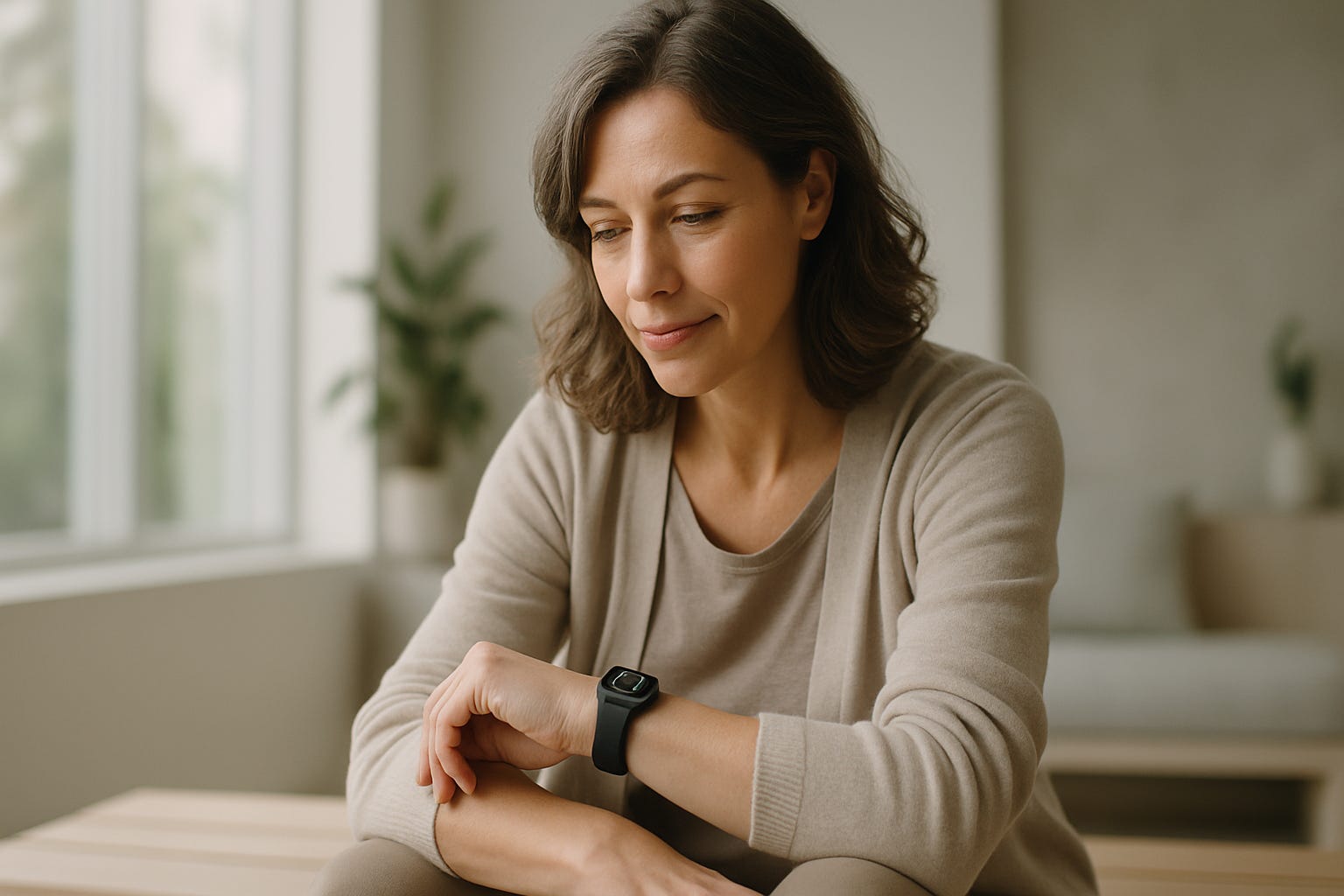
Steps are the gateway drug of health tracking. They’re easy to understand, easy to display on a watch face, and, honestly, not that useful once you’ve built the habit of moving around. If you’re serious about longevity, the metrics that matter are quieter and less flashy: heart rate variability, VO2 max, resting heart rate, and how your body handles glucose while you sleep. 🧬 The good news is the wearable industry finally caught up. The devices sitting on shelves right now can track most of this without you doing anything except, well, wearing them.
Let’s talk about which metrics are actually worth your attention, and which device tracks each one best.
The metric that beats your doctor’s checklist
If I had to pick one number to obsess over, it’s VO2 max, your body’s maximum rate of oxygen use during intense effort. This isn’t a fringe biohacker opinion. A 2018 JAMA Network Open analysis of 122,007 adults who completed treadmill testing found that people in the “elite” fitness range had dramatically lower mortality risk than those in the “low” range, a gap the researchers described as comparable to or greater than the risk difference from smoking or diabetes. Every 1-MET increase in fitness (about 3.5 ml/kg/min of VO2 max) tracks with roughly a 12 to 15% drop in all-cause mortality. 📈
What makes VO2 max special compared to something like cholesterol is that there’s no ceiling. Other risk factors flip from harmful to neutral at some point. Fitness just keeps paying dividends the higher it climbs, according to the same research.
Garmin watches (Fenix, Forerunner) use Firstbeat Analytics and are widely considered the closest wrist-based estimate to lab results, typically within 5 to 10% of clinical testing
Apple Watch estimates “Cardio Fitness” using a large clinical gait and heart-rate database, strong for steady walking and running
Polar H10 chest strap remains the gold standard for raw heart-rate accuracy, since wrist sensors struggle during high-intensity intervals
For the most trustworthy number, pair a chest strap with your watch during workouts and let the watch handle passive tracking the rest of the day
I’ll admit a chest strap is not exactly comfortable, and most people (myself included, some days) will skip it. That’s fine. A slightly less precise number you actually check beats a perfect number sitting in a drawer.
HRV and resting heart rate: the numbers your nervous system won’t lie about
Heart rate variability (HRV) measures the tiny variation in time between heartbeats, and it’s become the go-to signal for how your body is coping with stress, training load, and recovery. Higher HRV generally tracks with better resilience. Interventions known to slow aging, things like consistent exercise, quality sleep, and stress management, reliably nudge HRV upward over time.
Resting heart rate (RHR) is the simpler cousin. It typically climbs a bit with age, and the trend is what matters, not any single morning’s reading. One widely cited estimate suggests each 10 bpm increase in resting heart rate is associated with roughly a 15 to 20% higher mortality risk, which is a bigger number than most people expect from something so unglamorous. 🔬
Oura Ring is widely considered the sleep and overnight-HRV benchmark among consumer wearables
WHOOP tracks HRV continuously (not just overnight) and folds it into a daily Recovery score
Apple Watch captures HRV on-demand and overnight, with steadily improving accuracy
All major wearables handle resting heart rate reasonably well; this is the one metric where brand matters least
Here’s my honest take: HRV numbers bounce around a lot day to day, and if you check it obsessively you’ll drive yourself a little crazy over noise. Look at the trend line over a month, not the number after last night’s argument with your sibling.
Beyond the heart: sleep staging, skin temperature, and the newer contenders
Sleep is arguably the single biggest lever most people underuse for longevity, and modern wearables have gotten genuinely good at estimating sleep stages, not just total hours. Combine that with overnight skin temperature (a proxy for illness, cycle changes, or overtraining) and you get a fuller picture than a step count ever gave you. ⚡
A few devices worth knowing about beyond the usual Oura-versus-WHOOP debate:
Oura Ring 5, which shipped in mid-2026, added a Cardiovascular Age metric and blood-test integration on top of its sleep-staging strength
WHOOP now ships a Biological Age metric and a daily behavior checklist aimed at lowering it, plus a medical-grade WHOOP MG tier
Hume Band 2.0, a screenless band released in 2026, leans specifically into longevity framing with metrics like “Metabolic Capacity” and blood pressure trend tracking, without a mandatory subscription
Continuous glucose monitors (CGMs), some now available without a prescription, reveal how specific meals and late-night eating spike your blood sugar, a pattern tied to inflammation and metabolic aging over time
If you’ve read our piece on how meal timing affects cellular aging, a CGM is basically the real-time feedback loop for that idea. You can watch, in numbers, what a 9 p.m. dinner does to your glucose curve compared to a 6 p.m. one.
What none of these devices can actually do
I want to be straight with you here, because the marketing around “biological age” wearables has gotten ahead of the science. No consumer wearable measures biological age directly. What they measure are well-validated proxies, like HRV, VO2 max, and sleep quality, and then an algorithm converts those into a friendly-looking age number. That’s useful for tracking your own trend over time. It’s not the same as an epigenetic clock or a blood panel measuring things like ApoB or hsCRP.
Wearable-only apps (SuperAge, Humanity) pull entirely from device data: no blood draw required, but less clinically grounded
Blood-based tools like InsideTracker analyze dozens of actual biomarkers, which is closer to what a doctor means by “biological age,” but you can only retest every few months
Treat any single day’s reading as a conversation starter, not a verdict. A bad HRV night probably just means you had a rough day, not that you aged five years overnight
If you’re deciding where to start, I’d rank it like this: get a device that tracks HRV and sleep well first, since those data streams are the most actionable day to day. Add a VO2 max-focused tool once you’re actually training toward a fitness goal. Consider a CGM only if you’re curious about specific food and timing effects, since it’s the most short-term, experiment-driven of the bunch. For a broader look at which cheap, low-tech habits move these same numbers before you even buy a device, our guide to 7 Affordable Longevity Technologies You Can Start Using Today is a good place to start.
So, before you add another device to your nightstand charging pile: which of these numbers, HRV, VO2 max, or overnight glucose, do you actually not know about your own body right now? 🌱