

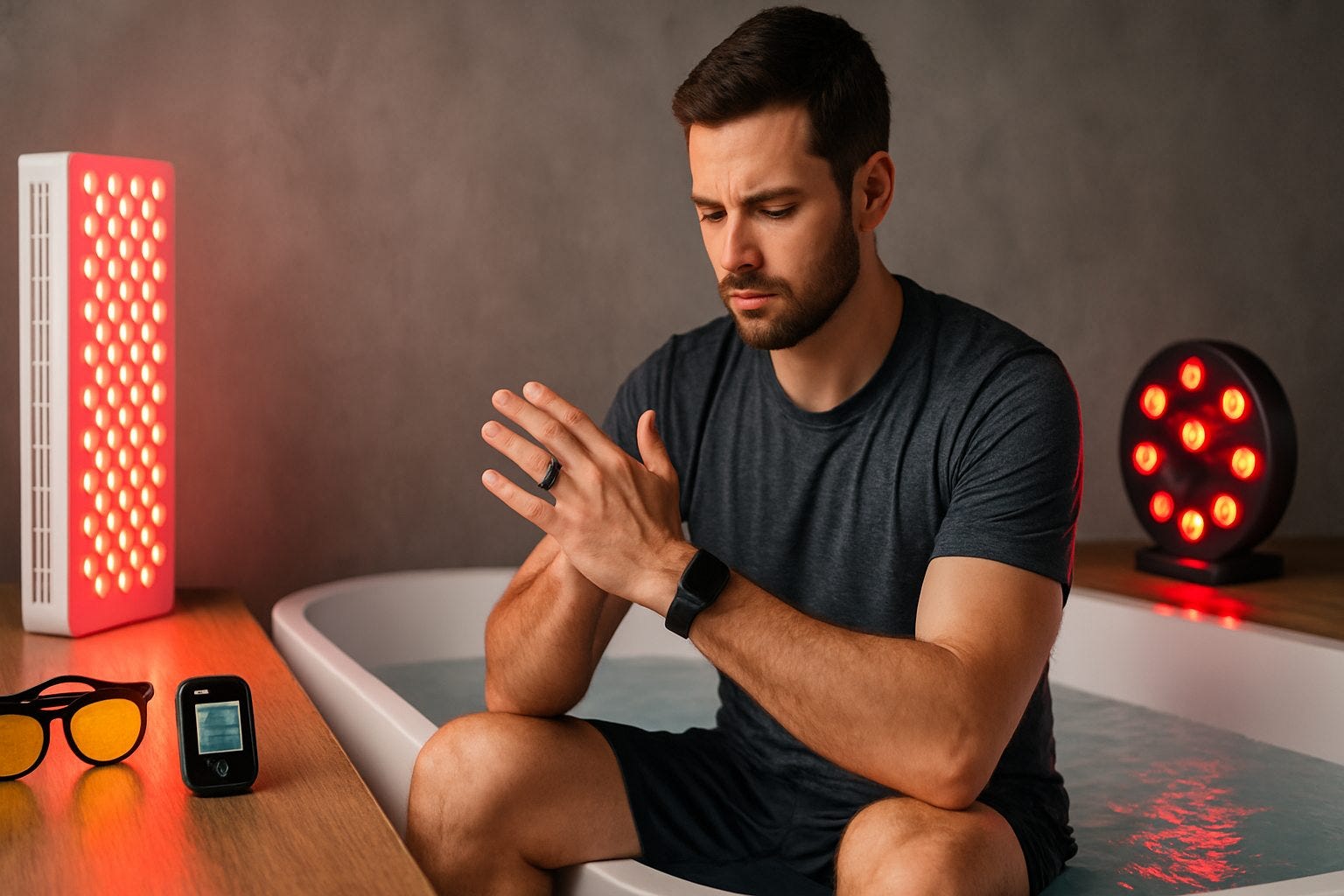
Welcome to the wild, shimmering frontier of biohacking—where wearables hum, lights glow, rings monitor your soul (okay, maybe just your sleep), and gadgets promise you a smarter, stronger you. But as any good editor knows, not every shiny tool truly moves the needle. Some do. Some… don’t. Let’s dig in.
In this piece, I’ll walk you through five biohacking gadgets I genuinely believe are worth your hard-earned dollars—and two that might look cool on Instagram but don’t deliver enough value (yet). I’m writing as someone who’s seen a lot of hype, done a fair bit of digging, and saved you some trial-and-error. You’ll see clear picks, sharp observations, and yes—some sarcasm, because this space can get absurd. Ready? Let’s go. 🚀
✅ The 5 gadgets worth the price tag
1. Smart rings / wearable trackers (example: Oura Ring)
Wearables aren’t new—but the smart ring form factor is making serious waves. Reviews highlight how the Oura Ring nails sleep, recovery, body temperature and heart-rate variability better than many wrist devices.
Why it’s worth it: It gives discreet, continuous data with minimal fuss. You wear it, it collects. The payoff: meaningful insights into how your body responds to sleep, stress, workouts.
Pro tip: Don’t expect magical “live up-grades”—but do expect incremental gains from smarter recovery, better sleep timing.
Question for you: What’s your biggest body signal you’d like to improve—sleep? stress? recovery?
2. Red-light / near-infrared therapy devices
This is the “light shows your cells some love” category. Devices that bathe you (or a part of you) in specific wavelengths to boost mitochondrial function and recovery. Websites like GlycanAge list them among top biohacking tools.
Why it’s worth it: If you train hard, struggle with recovery or skin health, this gives you a real lever.
Caveat: Requires discipline (regular sessions) and decent space/ventilation. Not “plug in once, done”.
3. Blue-light blocking glasses / circadian-hacking eyewear
Here’s a simple one: we stare at screens, mess up our melatonin, wonder why we’re wired at midnight. Blue-light blockers aren’t high-tech—they’re smart. Blogs show they help regulate sleep and reduce eye strain.
Why it’s worth it: Low cost, low risk, decent upside. If you’re on screens all day, it’s almost no-brainer.
Don’t over-promise: They help regulate light exposure—won’t fix deep medical sleep disorders.
4. Cold-plunge / cryo-shower style devices
This is the “go hard or go home” gadget. Immersing in cold (or floating in near-freeze) has become trendy. Experts list cold exposure among top biohacks for anti-inflammation, resilience and recovery.
Why it’s worth it: If you build it into your routine—done regularly—it adds real physiological stress adaptation that most gadgets only promise.
Heads-up: It’s an investment (tub, installation) + you’ll need consistent use to get value.
5. Continuous glucose monitors / metabolism trackers
Watching your body’s metabolic response in real time is compelling. From what I saw, gadgets that track glucose, nutrient response, etc., move beyond “tracking steps” into meaningful insights.
Why it’s worth it: If you’re serious about optimizing nutrition, recovery, performance—this gives you actionable data.
The nuance: It’s most valuable if you act on the data. Without behavior change, it becomes expensive wrist-bling.
❌ Two gadgets that might not be worth the price (yet)
A. Fancy “environment monitor” pods for wellness (example: Ultrahuman Home)
In a recent review, this device (air quality + light + sound + temp monitor) came off as “sleek but unfinished” and “borderline overpriced”.
My take: The tech is interesting, but the value is ambiguous. If all it gives you is “open a window now”, you could get similar benefit with cheaper sensors or just old-fashioned awareness.
Conclusion: Wait for version 2.0 or a price drop.
B. High-end ‘human optimization pods’ with massive price tags
Think ultra-expensive chambers promising superhuman recovery, combining red-light, vibration, hydrogen breathing and more. One device listed for $160K (!) and a session cost of $300+ per visit.
My view: The hype is strong. The science—thin. For most of us, cost vs benefit doesn’t add up. Unless you’re an elite athlete with deep pockets, this is likely “nice idea, limited ROI”.
Recommendation: If you’re tempted, ask for robust evidence, trial sessions, and look at long-term outcomes—not just “feel good” anecdotes.
✅ Reviewing the criteria: Why these picks make the cut
They aren’t just flashy. They offer data or response you can act on.
They solve a tangible problem (sleep disruption, recovery, metabolism) rather than promise vague “optimization”.
They fit into real lifestyles (you don’t need to live in a lab).
They are supported by multiple independent reviews and expert commentary. (See citations above.)
❌ And why the others don’t (yet)
They rely heavily on hype or unproven claims.
They carry high cost without clear incremental benefit.
Their value depends heavily on context, user behavior, or follow-up actions.
Experts have flagged them as “useful only if you know what to do with it” rather than plugs-and-play. For example:
“Mindless biohacking gadgets… are only as good as the context in which they are used.”
Also read: 7 Celebrities Who Are Biohacking Aging (And What They’re Using)
Final thoughts & CTA
Biohacking is thrilling because it empowers you to take a proactive stance on your body and mind. But as you shop gadgets, remember: tech doesn’t magically create optimal health. You have to show up. You have to act. You have to integrate.
📌 If you’re ready to pick one gadget to start with: pick the one that addresses your weakest link (sleep? recovery? nutrition?).
📌 If you’re considering a high-ticket gadget, ask: “What’s the measurable benefit over 6-12 months? Will it change my behavior or just collect data?”
And yes—always check the science, not just the hype.