

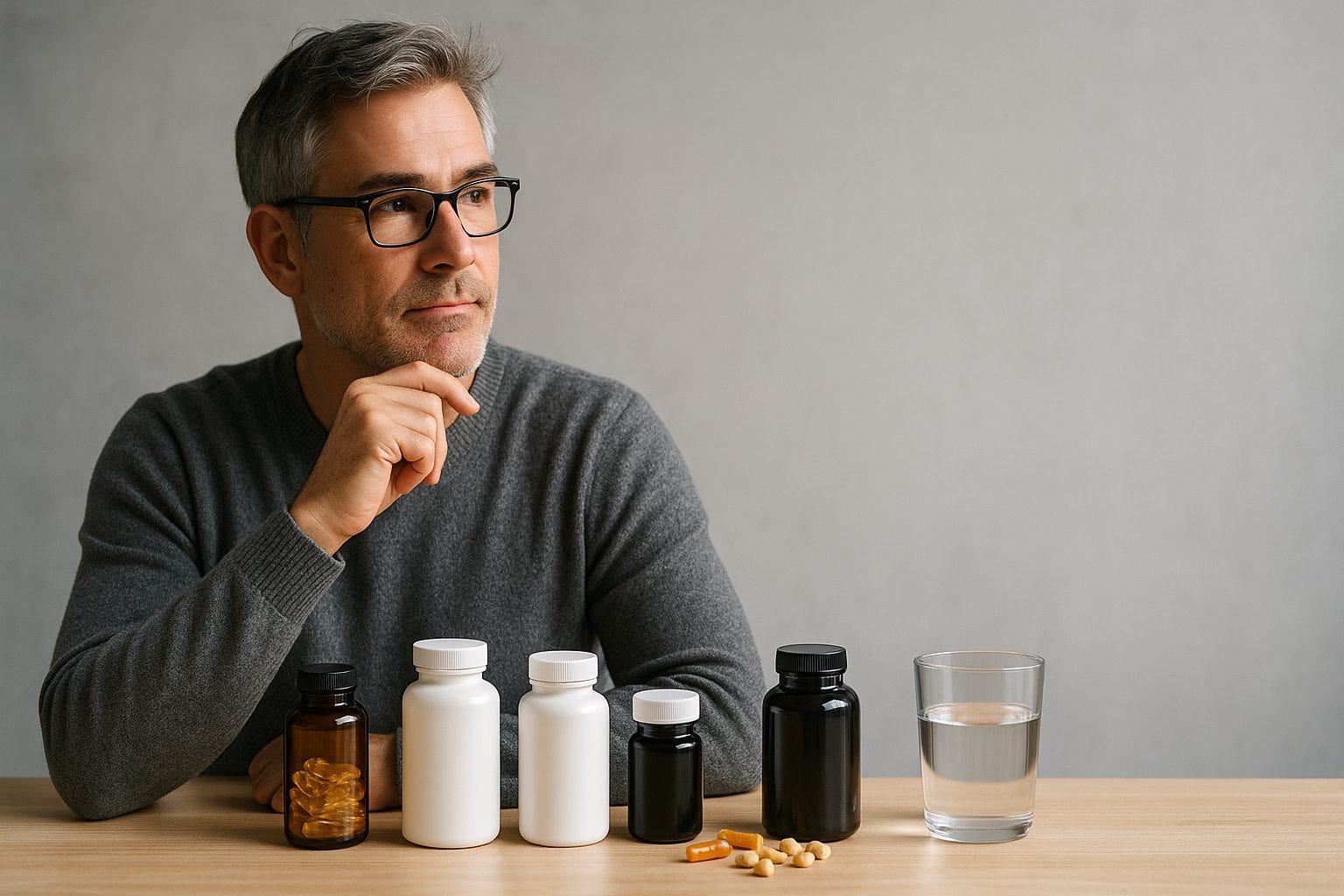
We all want to live longer. But even more—live longer well. That’s why I pulled on my editor’s blazer, dove into the latest longevity-science chatter, and surfaced five supplements that real researchers and doctors (yep, the folks who study ageing for a living) admit taking themselves. 🕵️♀️
Now, a big caveat: none of these are magic pills. Many still sit in the “promising but not proven” bucket. As one blog put it: “No pill has proven to extend human lifespan.“
Still, if you’re curious about what’s getting traction in the longevity community—and whether you might consider them (in consultation with a health professional)—this is your guided tour.
1. Omega-3 Fatty Acids (Fish Oil, EPA/DHA)
If longevity supplements were a rock band, omega-3s are the bass player: steady, reliable, sometimes overlooked—but crucial.
Multiple studies show that folks who are low in omega-3s (especially those who don’t eat much oily fish) may benefit from supplementation. For example: in a Swiss trial, taking 1 g of omega-3 per day for three years shaved off about 3-4 months of biological ageing as measured by epigenetic clocks.
Experts like Eric Verdin (leader in ageing research) and Peter Attia include omega-3s in their personal stacks.
👉 What to know: If your diet lacks fatty fish, an omega-3 supplement seems like a reasonable choice. The benefit may be modest, but it looks low risk for most people.
2. Vitamin D (Often with K2)
Vitamin D is the poster-child of sensible longevity nutrition. A recent study found that vitamin D supplementation may help preserve telomere length (those DNA end-caps tied to ageing) in a large cohort.
Doctors studying longevity often say: slow the deficiencies first. You’ll hear “vitamin D makes sense for almost everyone around my age.”
Vitamin K2 often shows up alongside vitamin D in recommendations (because D drives calcium into bones; K2 helps move it away from arteries).
👉 What to know: If your blood levels are low, supplementing vitamin D (plus K2) looks like a safe “first move” before chasing exotic compounds.
3. Creatine Monohydrate
Yes—the same stuff gym guys take to lift more. But there’s growing interest from longevity docs for its broader benefits.
It helps preserve muscle mass (crucial as we age), supports brain energy, and appears in expert lists for healthy ageing.
👉 What to know: If you do strength training or worry about muscular decline, creatine is a practical, evidence-backed choice. Not flashy, but solid.
4. Magnesium (and B-Vitamins / Methylation Support)
Magnesium quietly shows up in many researcher stacks. Why? Because many adults are borderline deficient and magnesium functions in hundreds of enzymatic reactions.
Also, doctors taking supplements for longevity mention B-complex vitamins (folate, B12) because of evidence around methylation, homocysteine, and brain health.
👉 What to know: These are less flashy “anti-ageing” pills and more “make sure your biochemistry doesn’t screw you over”. If your labs show low magnesium or B12/folate issues—address them.
5. Senolytics / NAD+ Precursors / Emerging Compounds
This is where things get exciting and speculative. The compounds in this category include things like fisetin, resveratrol, nicotinamide mononucleotide (NMN), nicotinamide riboside (NR), and other molecules aimed to hit the “hallmarks of ageing”.
For example: David Sinclair (Harvard longevity researcher) reportedly takes NMN, resveratrol, fisetin and fish oil among other things.
But—and this is key—the evidence in humans is thin. Many of the dramatic longevity claims remain in animal models or short-term biomarker studies.
👉 What to know: Think of this category as optional and experimental. Only move here once the basics are covered, you have lab data, and you’re fully aware of the uncertainty.
Also read: Senolytics Explained: How “Zombie Cell” Clearing Could Extend Your Healthspan
Putting It All Together
Here’s how I’d map it out (if I were you):
✅ Cover the fundamentals (diet, sleep, exercise, social connection) — because this stuff moves the longevity needle far more than any pill.
✅ Make sure you’re not missing critical nutrients: Omega-3s (if your diet lacks fish), vitamin D (+K2), magnesium, B-vitamins.
✅ Add tailored choices like creatine if you’re training, ageing, or want brain/muscle support.
🧪 Then decide if you’re comfortable exploring emerging compounds—fully aware there’s risk and limited long-term human data.
Also read: 5 Breakthrough Supplements Backed by Science for Healthy Aging
Call-to-Action
Are you ready to look at your lab work (vitamin D, omega-3 index, magnesium, B12/folate) and see where you stand before diving into any of this? Or would you like me to pull the latest human-trial data for one of the emerging compounds (e.g., NMN or fisetin)? Just say the word.