

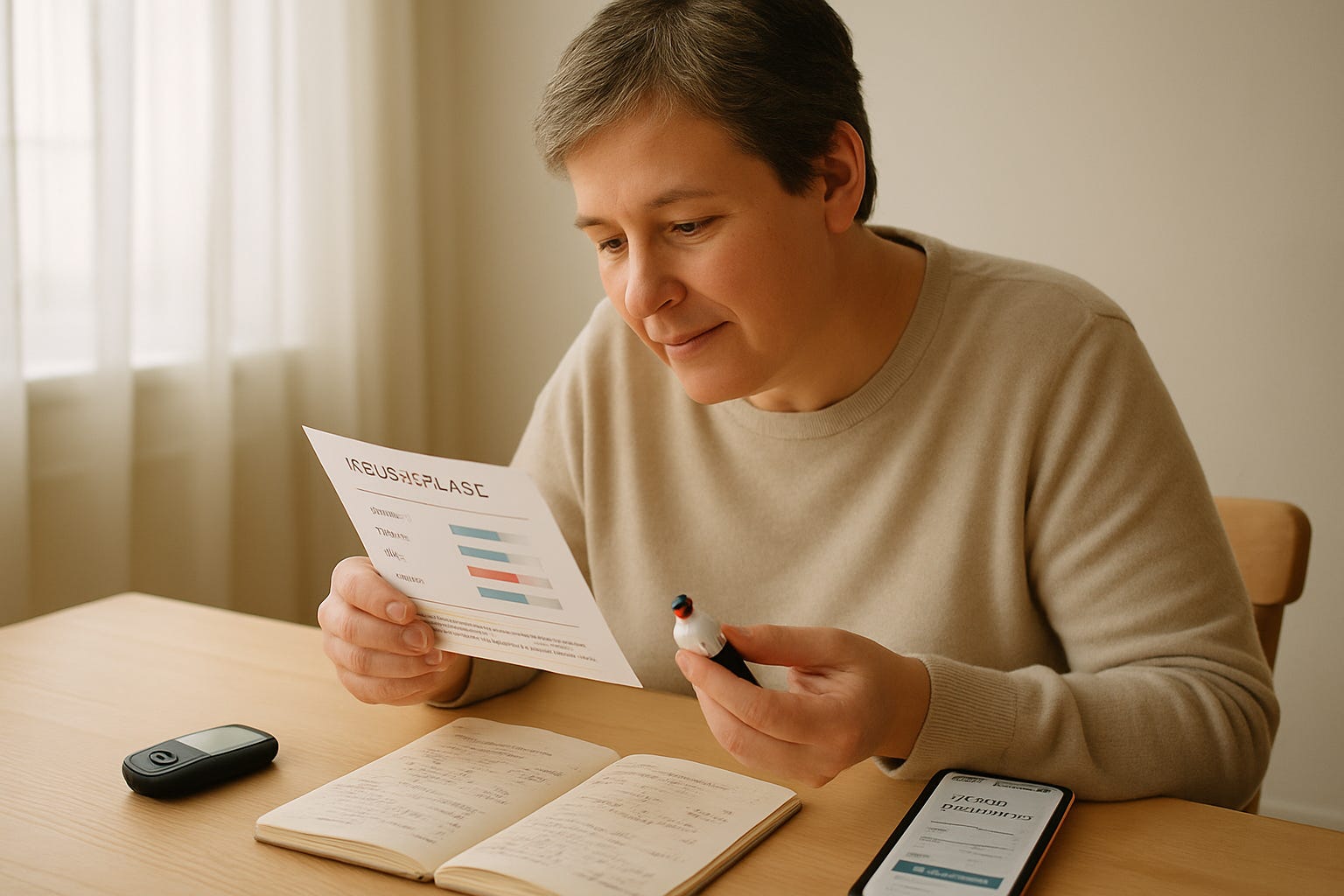
The longevity industry has a talent for making you feel like biological age testing is reserved for people who own infrared saunas and have a functional medicine concierge on speed dial. The marketing is relentless: premium DNA methylation kits, proprietary blood panels, epigenetic clocks that cost more than a plane ticket. And yes, the high-end tests are impressive. But here’s what doesn’t get said nearly enough: you can get a genuinely useful, scientifically grounded picture of your biological age using tests you can do in your living room, a free online calculator, and a standard blood draw that your insurance may already cover.
I think the $400 kit is worth it eventually. But it’s not where you start. You start here.
Biological age is not a single number any one test can definitively nail. As Hims Health’s medical team summarized in late 2025, no existing method captures the full picture of aging from a single measurement — not DNA methylation, not telomere length, not blood chemistry alone. The honest answer is that combining multiple methods gives you the most useful signal. The good news is that the combination below costs almost nothing.
Test 1 — The 10-second balance test (free, takes 30 seconds)
This one will humble you, and the data behind it is serious. 🧍
A landmark study published in the British Journal of Sports Medicine, tracking 1,702 adults aged 51 to 75 over a seven-year follow-up, found that those who couldn’t stand unsupported on one leg for 10 seconds had an 84% higher risk of dying from any cause within the following decade — even after adjusting for age, sex, BMI, and existing health conditions. Harvard Health covered the findings and noted how unusual it is for such a brief, low-tech test to carry that kind of predictive power.
Why does a balance test predict longevity? Poor balance isn’t just a fall-risk indicator. It reflects the integrated output of your nervous system, muscular strength, coordination, and cardiovascular health. When those systems age, balance degrades — often before you notice anything else. A 55-year-old who nails the test is broadcasting something real about their underlying health.
How to do it:
Stand on one foot without holding onto anything, with your gaze fixed straight ahead
Place the raised foot lightly against the back of your standing leg
Time yourself without wobbling, hopping, or touching anything for support 🕐
You get three tries per leg
Target: 10 seconds clean. Younger adults in good shape often hold 30+ seconds; the drop-off with age is steep
If you’re over 50 and can’t clear 10 seconds, that’s not a verdict — it’s information, and balance improves quickly with targeted practice. If you’re under 50 and struggling, that’s worth paying attention to more than you probably expected.
Test 2 — Your waist-to-height ratio (free, takes 2 minutes)
Forget BMI. It’s a blunt instrument that mixes up lean muscle and dangerous fat. The metric you actually want is the waist-to-height ratio (WHtR), and all you need is a tape measure. 📏
The calculation is almost insultingly simple: divide your waist circumference by your height, both in the same units. A ratio below 0.5 is the widely accepted threshold for low cardiometabolic risk. Wikipedia’s entry on WHtR notes that the UK’s National Institute for Health and Care Excellence advises all adults to keep their waist below half their height — and that this single threshold works across age groups and genders, which BMI cutoffs do not.
What WHtR actually measures is visceral fat — the metabolically active fat packed around your organs, not the subcutaneous stuff you can pinch. Visceral fat produces inflammatory cytokines, disrupts insulin signaling, and accelerates most of the hallmarks of biological aging. It’s the fat that matters most. A 2022 systematic review confirmed that WHtR outperforms BMI in predicting years of life lost.
Interpreting your number:
Below 0.40: Potentially underweight, worth investigating
0.40 to 0.50: Healthy range — keep doing what you’re doing 💚
0.50 to 0.60: Elevated risk; time to take visceral fat seriously
Above 0.60: High risk; warrants medical attention and real lifestyle change
Measure at the narrowest point between your bottom rib and hip bone, not at the navel (which inflates the number), and don’t cheat by sucking in. The reading is for you.
Test 3 — The PhenoAge calculator (free, needs recent blood work)
This is where things get genuinely interesting from a scientific standpoint. The PhenoAge algorithm was developed by Dr. Morgan Levine at Yale University and validated in a cohort of 11,432 adults. It takes nine routine blood biomarkers — albumin, creatinine, glucose, high-sensitivity CRP, alkaline phosphatase, white blood cell count, lymphocyte percentage, mean cell volume, and red cell distribution width — and produces a biological age estimate that has outperformed chronological age as a predictor of all-cause mortality in large population studies. 🔬
Several free calculators run this formula directly in your browser. The one at longevity-tools.com was confirmed as using the correct formula by Levine herself — no email, no login, no data stored. You get an instant result from numbers you may already have sitting in your patient portal from a recent physical.
The biomarkers it uses come from:
A Complete Blood Count (CBC) — standard and often covered by insurance
A Comprehensive Metabolic Panel (CMP) — also standard
An hs-CRP (high-sensitivity C-reactive protein) — sometimes needs to be specifically requested
If your biological age comes back lower than your chronological age, that’s meaningful. If it comes back higher, the individual biomarkers in the report tell you exactly which systems are dragging the number up — and most of them respond to targeted lifestyle changes within weeks to months. LongevityHub’s full breakdown of the longevity score assessment puts PhenoAge in context alongside VO2 max, grip strength, and other metrics that together give you a much richer picture than any single number alone.
Have you already had bloodwork done in the last 12 months? If so, you may already have most of what PhenoAge needs sitting in a health portal right now.
Test 4 — Grip strength (under $30 for a dynamometer, or free at a pharmacy)
Grip strength is one of those metrics that sounds trivial until you see the research, at which point it becomes hard to unsee. A meta-analysis covering over 3 million participants found that every 5-kg decrease in grip strength is independently associated with a 16% increase in all-cause mortality risk — a finding consistent across populations, ages, and health conditions. Research published in BMC Geriatrics in 2025 went further, finding that lower grip strength directly correlates with faster DNA methylation age acceleration — meaning your cells are biologically aging faster at the epigenetic level. 💪
Michigan Medicine researchers put it plainly: this is the first strong evidence of a biological link between muscle weakness and actual acceleration in biological age.
You can test grip strength three ways:
A hand dynamometer, available on Amazon for $20-30, is the most accurate at-home option
Some pharmacies and gyms have them available for free
If you have a doctor’s appointment, ask for it — it takes 30 seconds and is increasingly used as a routine vital sign
Rough benchmarks to check yourself against: men under 57 lbs (26 kg) and women under 35 lbs (16 kg) show meaningfully elevated mortality risk according to the 2022 Ageing Research Reviews meta-analysis. The more useful data point is your trend over time. If your grip is declining year over year, that’s a signal worth acting on — resistance training reverses it at any age.
Test 5 — Heart rate variability tracking (free with many smartphones, or a $0-40 app)
Heart rate variability (HRV) is the variation in time between consecutive heartbeats. A high HRV means your autonomic nervous system is flexible and responsive — the hallmark of a well-regulated, younger-functioning cardiovascular system. A chronically low HRV means it’s stuck, rigid, stressed. ❤️
HRV declines with age, but the range within any age group is enormous — and that variation maps closely onto lifestyle. A recent multi-study analysis published in Sensors in November 2025, cited in LongevityHub’s longevity tracking guide, confirmed that wearable-measured HRV shows meaningful associations with average blood glucose, depressive symptoms, sleep quality, and recovery — making it one of the most information-dense cheap signals available.
How to track it on the cheap:
Apple Watch, Fitbit, or Garmin already measure overnight HRV — check your app’s health dashboard, no extra purchase required
The Oura Ring tracks HRV continuously and now offers a cardiovascular age estimate, but it costs more than $50 to buy
Several free apps (Welltory is one) use your phone’s camera to measure HRV in under two minutes via pulse detection — not as accurate as a dedicated wearable, but directionally useful
What to watch for isn’t a single morning reading. It’s your personal baseline over weeks, and whether it trends up or down in response to lifestyle changes. A HRV that moves meaningfully upward when you add consistent zone 2 cardio or cut alcohol is telling you something biochemically real.
The five tests above cost almost nothing, take under 30 minutes combined, and cover meaningfully different biological systems — balance and neuromuscular aging, visceral fat and metabolic risk, blood-based organ function, musculoskeletal aging, and autonomic nervous system health. Run them all, note the numbers, and check LongevityHub’s article on what a biological age test actually tells you before deciding whether a more expensive DNA methylation test is your next step.
Which of these five tests do you think would give you the most uncomfortable result — and does that make you more or less likely to actually try it?