

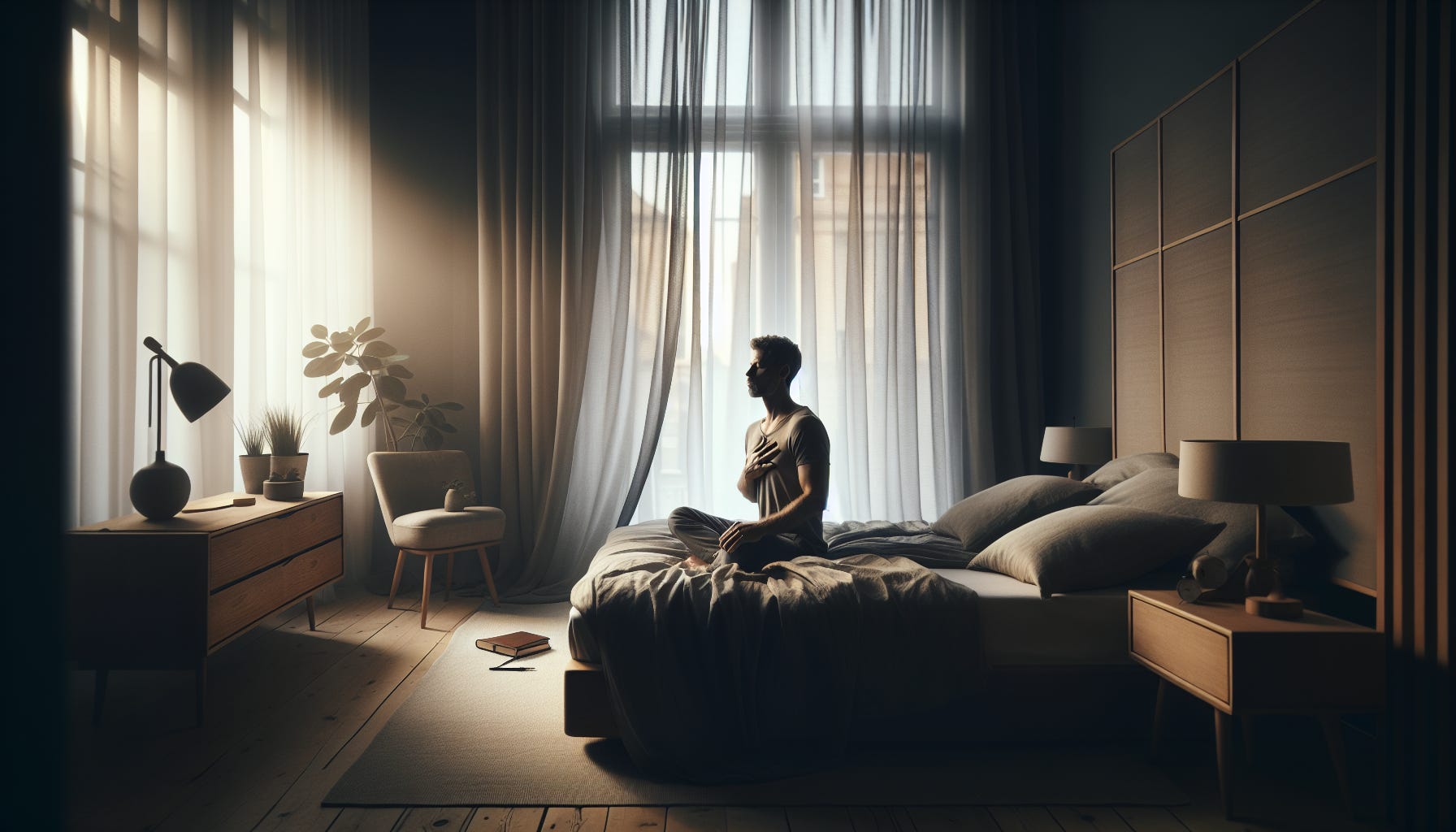
You probably know your chronological age. It’s on your passport, your birthday cake, your increasingly alarming tax returns. What you probably don’t know, and what actually matters far more, is your biological age: the age your cells, tissues, and organs are genuinely functioning at, regardless of what the calendar says. The two numbers can diverge by a decade or more. People with the same birthdate can test with biological ages fifteen years apart. That gap is not fate. It is largely behavior.
Here’s the uncomfortable truth: most of us are aging faster than we need to. Evening stress, poor sleep prep, and chronically elevated cortisol are quietly accelerating the very cellular processes that make you feel and look older. But the good news, and I think this is genuinely exciting, is that some of the most effective anti-aging interventions are stupidly simple. We’re talking five minutes before bed.
This isn’t a pitch for another elaborate wellness protocol. It’s a precise, science-backed sequence: 90 seconds of 4-7-8 breathing, two minutes of gratitude journaling, and a one-minute environment reset. Small habits. Compounding results. Let’s break it down.
What biological age actually is (and why evenings wreck it)
Biological age is not a vague concept. Scientists measure it with epigenetic clocks, looking at DNA methylation patterns, telomere length, inflammatory biomarkers like C-reactive protein and interleukin-6, and markers of metabolic health like fasting glucose and HbA1c 🧬. A comprehensive study using data from over half a million participants in the UK Biobank found that lifestyle factors including sleep quality, diet, and physical activity are directly and measurably associated with biological aging. The people with healthy sleep patterns showed consistently younger biological ages across multiple validated measurement methods.
The evening hours matter disproportionately. Here’s why: cortisol, your primary stress hormone, follows a daily rhythm. It should taper off by late evening, allowing your body to drop into repair mode. When it doesn’t, because you’ve spent your night doomscrolling, replaying tense conversations, or eating a large meal close to bed, the cortisol stays elevated. And chronically elevated cortisol is, according to research published in PMC, directly associated with accelerated aging, reduced immune function, and shorter telomeres 🔬.
Key things elevated evening cortisol does to your body over time:
Shortens telomeres, the protective caps on DNA strands that act as a cellular clock
Raises baseline inflammation markers like IL-6 and CRP
Disrupts deep sleep and reduces the growth hormone release that repairs tissue
Impairs glucose metabolism, pushing your metabolic age older
Suppresses DNA repair mechanisms that your cells desperately need overnight
If you’ve been wondering why you feel older than your age, this is probably part of the answer. The good news is that the solution is embarrassingly cheap.
The 90-second breathing trick your nervous system is begging for
The first element of this routine takes less than two minutes and requires zero equipment. 💨 It’s called 4-7-8 breathing, and it is, I’ll say it plainly, one of the most underrated tools in longevity. The technique is simple: inhale through your nose for four counts, hold for seven counts, exhale slowly through your mouth for eight counts. Four cycles takes about 90 seconds.
What actually happens in your body during those 90 seconds is remarkable. The extended exhale phase stimulates the vagus nerve, which directly activates your parasympathetic nervous system, what scientists call the “rest-and-digest” state 🧠. A study published in Physiological Reports found significant improvements in heart rate variability (HRV) and reductions in systolic blood pressure after practicing the technique. A 2024 meta-analysis across 15 clinical studies on slow-breathing exercises, published in the International Journal of Cardiology Cardiovascular Risk Prevention, found statistically significant reductions in both resting blood pressure and resting heart rate after breathing interventions.
Why does this matter for biological age? Because HRV, the variability between heartbeats, is one of the most reliable proxies for biological aging. Higher HRV signals a resilient, adaptable nervous system. Lower HRV correlates with older biological age and higher all-cause mortality risk. When you do evening breathwork as part of a beginner biohacking practice, you’re not just relaxing. You’re measurably improving a key aging biomarker.
How to do the four rounds correctly:
Sit upright or lie flat, with your tongue resting behind your upper front teeth
Exhale completely through your mouth before you begin
Inhale through your nose for a 4-count
Hold your breath for a 7-count
Exhale slowly through your mouth, making a “whoosh” sound, for an 8-count
Repeat for four total cycles
Do you currently have any kind of wind-down routine? It’s worth asking yourself honestly, because the answer probably predicts a lot about how rested you feel in the morning.
The two-minute gratitude journal that fights inflammation
This one surprises people. It surprised me too. Gratitude journaling sounds like something your overly cheerful coworker recommends. But the biology behind it is serious, and I’d argue it’s the most elegant intervention in this entire routine. 📓
Harvard Health published findings in July 2024 from the long-running Nurses’ Health Study, drawing on data from 49,275 women and finding that gratitude is associated with lower mortality. That study, published in JAMA Psychiatry, noted that regular gratitude practice links to better sleep quality, lower depression risk, and favorable cardiovascular markers. Researchers at University of California San Diego found that heart failure patients who completed eight weeks of daily gratitude journaling showed decreased inflammatory biomarkers at the end of the experiment, specifically the same cytokines and C-reactive protein levels that accelerate cellular aging.
Perhaps most directly relevant: a 2018 randomized experiment published in Psychosomatic Medicine found that participants who kept a gratitude journal for six weeks had noticeably reduced morning cortisol levels compared to a control group. Remember how elevated cortisol is the accelerant on your biological age? This is the fire extinguisher. 🌿
The mechanism is not magical. Gratitude shifts cognitive attention away from rumination, worry, and threat-detection, the mental states that keep your sympathetic nervous system engaged late into the night. When your brain stops scanning for danger, cortisol drops. When cortisol drops consistently, inflammation drops too. And as we’ve explored in detail on what poor sleep does to your aging rate, anything that protects your overnight cortisol curve protects your biological clock.
The journaling itself takes two minutes. Three items. That’s it:
One thing that went well today, however small (a good cup of coffee counts)
One person you feel genuinely grateful for, and specifically why
One thing about your body that functioned well, even if imperfectly
The specificity matters. “I’m grateful for my health” is cognitively easy and probably not doing much. “I’m grateful my lungs worked well enough to walk the dog in the rain without stopping” makes the brain actually register something real. That registration is what moves the needle on the cortisol response.
The one-minute environment reset that your melatonin desperately needs
I know, I know. You’ve heard the “put down your phone before bed” advice until it’s background noise. But I want to give you the precise mechanism, because once you understand why your phone is aging you, it stops being nagging advice and starts being a clear trade-off you’re consciously making. ⚡
Blue light, the high-frequency wavelength emitted by phones, tablets, and LED screens, suppresses melatonin synthesis by signaling to your circadian clock that it’s still daytime. Harvard Health researchers have noted that even short evening exposure can shift your circadian rhythm and reduce sleep quality, with long-term links to chronic metabolic disease. And a striking 2025 study in Nature Communications found that even a 10°C increase in nighttime temperature was linked to shorter, less restorative sleep, particularly in older adults.
Your one-minute environment reset covers three things:
Screens off (or on night mode with the display warmed and dimmed), at least 45-60 minutes before sleep 📵
Room temperature dropped to 18-20°C. Your core body temperature needs to fall by roughly 1-2°C to initiate deep sleep, and your environment either helps or fights that process
One cool glass of water. Mild hydration before sleep supports the metabolic processes that run overnight, and the physical act of it signals your routine is ending
Taken together, this minute of environment prep pairs naturally with the low-tech longevity hacks that consistently show up in the research: cold exposure, deliberate temperature management, circadian alignment. None of it is complicated. All of it compounds. 🌙
Why five minutes actually stacks up over time
Here is where I want to be honest about something: no single evening session is going to noticeably lower your biological age. The science isn’t working like that. What you’re building here is a daily cortisol pattern. A nightly inflammatory baseline. A sleep architecture that either repairs your cells or doesn’t. The UK Biobank research was explicit: it’s the combination of healthy sleep patterns, reduced inflammation, and lifestyle factors operating together over time that produces measurable biological age differences.
Think of it as compound interest on your cellular health 🔬. Thirty consecutive nights of lower evening cortisol means 30 nights of better deep sleep. Better deep sleep means more overnight HGH release, more DNA repair, less oxidative stress. Within weeks, the markers start to shift. Inflammatory cytokines come down. HRV scores improve. Telomere-protective genes get expressed more actively, according to research on mindfulness-based interventions and epigenetics from the journal PubMed (2021).
The people who most struggle with these habits, and I include myself in this when life gets chaotic, share one thing: they’re trying to insert a routine into a chaotic evening rather than anchoring it to something that already exists. Here’s the fix:
Anchor the breathing to teeth-brushing: the moment you finish, do your four breath cycles 💡
Keep a small notebook on your nightstand, not on your phone. The physical act of writing matters
Set your thermostat 30 minutes before bed on a timer so the room is already cooling when you walk in
Treat the five minutes as non-negotiable, in the same category as brushing your teeth, not as something you do if you have time
The research from Cornell University, published in 2025, found that strong social ties literally slow biological aging by building a more resilient body through reduced chronic inflammation. That’s a reminder that the psychological dimension of these habits matters. Gratitude journaling isn’t separate from the science of anti-inflammation. It’s part of the same feedback loop.
So here’s the question I’ll leave you with: if you could lower your biological age by one year over the next twelve months with five minutes of effort per night, would the cost feel worth it? And if the answer is yes, what’s actually stopping you from starting tonight? 🧬