

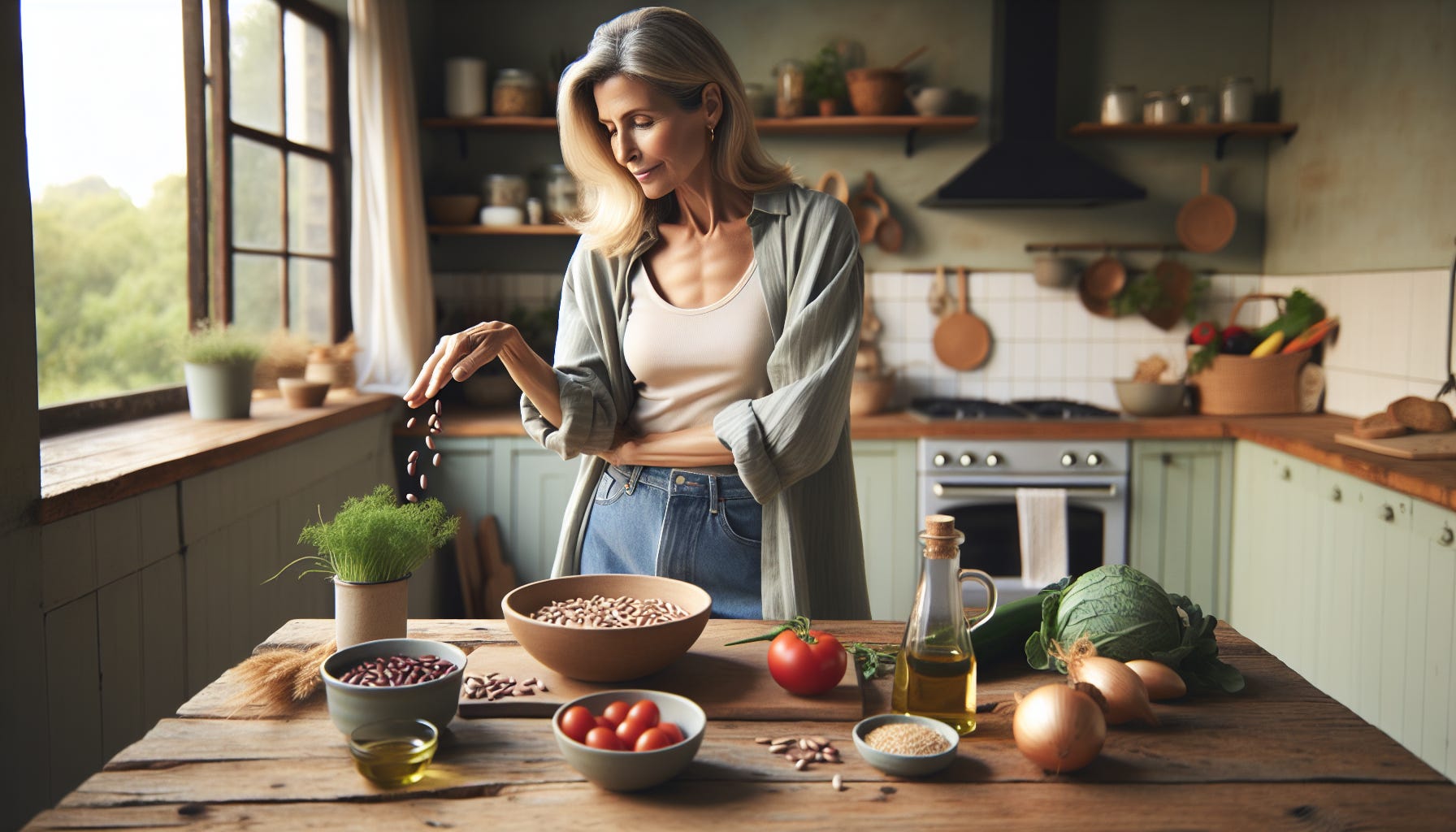
Dan Buettner has spent decades traveling to the corners of the world where people forget to die. His team analyzed more than 150 dietary surveys conducted across the five Blue Zone communities — Okinawa, Sardinia, Ikaria, Nicoya, and Loma Linda — and what they found was not what the wellness industry wants you to hear. No exotic superfoods. No expensive supplements. No 14-step protocols. Just a short list of whole, affordable, mostly plant-based foods eaten consistently, for a lifetime.
The centenarians in these communities don’t count calories or read nutritional labels. They cook what grows nearby. They eat with family. And their diets, while culturally different in almost every other way, share six foods with remarkable consistency. Here’s what those foods are, why the research supports them, and — the practical part — how you can work each one into your week starting now.
Beans: the undisputed longevity food
If there is one food the science keeps returning to, it’s beans. Not a specific variety. Not a branded product. Just beans, in whatever form you’ll actually eat them. 🫘
Researcher Dan Buettner has said, bluntly, that “in every Blue Zone I have visited, beans and other legumes were — and still are — a major component of the daily diet.” The data behind that observation is striking. A landmark study published in the Asia Pacific Journal of Clinical Nutrition tracked elderly adults across five populations on four continents and found that legumes were the single strongest dietary predictor of survival, regardless of ethnicity. Every 20 grams of additional daily legume intake — about a tablespoon and a half — was associated with a 7 to 8% reduction in mortality risk. A 2023 meta-analysis of more than one million people confirmed the relationship: each 50 grams of daily legume intake was linked to a 6% lower risk of early death.
The mechanism isn’t mysterious. Beans are packed with:
Soluble fiber, which feeds gut bacteria, reduces inflammation, and improves insulin sensitivity
Plant-based protein, which supports muscle maintenance without the inflammatory downsides of red meat
Polyphenols, which reduce oxidative stress at the cellular level
Folate, magnesium, potassium, and iron, which most Western diets consistently fall short on
A recent Tufts University study on the adult children of centenarians found that even this genetically advantaged group still didn’t eat enough beans and whole grains. That gap between knowing and doing is where most of us live. 🔬
The easy add: Stir half a cup of canned black beans into scrambled eggs. Drop lentils into whatever soup you’re already making. A can of chickpeas costs less than a dollar and takes 30 seconds to rinse. There is no simpler upgrade in this entire article.
Leafy greens: the ingredient centenarians never skip
Every Blue Zone community eats greens. Not the same greens — Ikarians favor wild dandelion and purslane, Okinawans eat bitter melon and sea vegetables, Sardinians cook with fennel greens and radicchio — but the commitment to dark leafy vegetables is constant across all five regions. 🌱
What makes this category so interesting is that the greens centenarians eat are often bitter, wild, or unusual by Western standards. Purslane, common in Ikarian cooking, contains more omega-3 fatty acids than almost any other leafy plant. Wild greens typical of Mediterranean diets have antioxidant concentrations many times higher than supermarket spinach because they grow slowly in challenging conditions, producing more protective compounds in the process.
The science on leafy greens and longevity is solid and consistent:
High intake of leafy vegetables is associated with slower cognitive decline as people age
The nitrates in greens like arugula and Swiss chard support cardiovascular function and blood pressure regulation
Lutein and zeaxanthin, found in kale and collard greens, protect against age-related macular degeneration
Vitamin K, abundant in dark greens, supports bone density and arterial health simultaneously
Centenarian diets in Blue Zone communities average 40 to 60 grams of fiber daily, compared to roughly 15 grams in the typical Western diet. Leafy greens, eaten at most meals, are a large part of how they get there. ⚡
Think about your current week. How many meals include a meaningful serving of dark leafy greens? If the answer is “fewer than four,” you have an obvious place to start.
The easy add: Massage a handful of kale into whatever grain you’re cooking — it wilts down to almost nothing and adds no work. Sauté Swiss chard in olive oil with garlic and eat it alongside literally anything. Wild arugula on top of eggs, pizza, or pasta is the Italian way and it works.
Whole grains: not a trend, just the actual foundation
Whole grains are so unsexy that the wellness industry keeps trying to replace them with alternatives. Cauliflower rice. Zucchini noodles. Low-carb everything. Meanwhile, in Sardinia, people have been eating whole grain sourdough bread for centuries and living to 100 with good cognition and minimal chronic disease. Go figure. 🌾
The Blue Zones food guidelines are specific on this point: centenarians eat bread made from 100% whole wheat or sourdough fermented to reduce its glycemic impact, not the pillowy white sandwich bread that fills most grocery store shelves. In Nicoya, Costa Rica, corn tortillas made from whole nixtamalized corn form the backbone of every meal. In Okinawa, it’s traditionally rice paired with sweet potato. In Loma Linda, Seventh-Day Adventists who eat 100% whole grain bread show significantly better metabolic markers than their neighbors.
The difference between whole grains and refined grains is not subtle. Refined grains have their bran and germ stripped away during processing, removing:
B vitamins (especially thiamine, niacin, and folate)
Fiber, which feeds beneficial gut bacteria and keeps blood sugar stable
Magnesium, deficiency of which is associated with increased cardiovascular risk
Antioxidants concentrated in the bran layer
Whole grains also produce shorter-chain fatty acids in the gut during fermentation, which actively reduce systemic inflammation. That inflammation reduction, compounded over decades, may be part of why centenarian populations show lower rates of the chronic diseases that kill most people. 🔬
The easy add: Swap your current bread for a genuine whole grain or sourdough option — check that “whole wheat” is the first ingredient, not just present. Cook a batch of oats, farro, or barley on Sunday and eat it across the week. One swap, sustained. That’s the whole game.
Olive oil: worth every drop
Olive oil appears in most Blue Zone communities, but its role is most dramatic in Sardinia and Ikaria, Greece. Ikarian research found that middle-aged people who consumed around six tablespoons of olive oil per day appeared to reduce their risk of dying by roughly half compared to those eating less. That is a large number. Researchers noticed it too. 🫒
The biology here goes deeper than “it has healthy fats,” though it does. Extra virgin olive oil contains oleocanthal, a polyphenol with anti-inflammatory properties similar in mechanism to ibuprofen. It contains oleic acid, a monounsaturated fat that improves cardiovascular function and supports cell membrane health. And it contains squalene and other minor bioactives that appear to protect DNA from oxidative damage.
In 2024, a Harvard-led study published in JAMA Network Open and highlighted by the National Institute on Aging analyzed 92,383 participants over 28 years and found that those with the highest olive oil consumption had a significantly lower risk of dying from dementia. The benefit held even after adjusting for overall diet quality, meaning olive oil contributed independently of everything else these people were doing well.
A few things worth knowing before you buy:
Extra virgin is what the research supports — not “pure olive oil” or “light olive oil,” which are refined and contain far fewer bioactive compounds
Heat degrades polyphenols somewhat, but olive oil is still a good cooking fat even when warm; save your finest bottle for drizzling raw
Storing it in a dark, cool place protects it from oxidation — skip the pretty glass bottle on the sunny windowsill
Sardinian centenarians drink Cannonau wine with olive-oil-rich meals, which may amplify the polyphenol effect ⚡
The easy add: Use olive oil as your default cooking fat instead of vegetable or seed oil. Drizzle it over finished dishes. Dip bread in it instead of spreading butter. None of this requires a recipe.
If you want a broader look at how lifestyle factors intersect with longevity, LongevityHub’s guide to beginner biohacks covers several habits that pair well with the dietary changes here.
Nuts: small things, outsized effect
Two ounces of nuts per day. That’s roughly what Blue Zone centenarians consume — a small handful, nothing dramatic. And yet the Adventist Health Study 2, one of the most rigorous long-term dietary studies conducted in North America, found that nut eaters outlive non-nut eaters by an average of two to three years. 🌰
The nut varieties differ by region. Ikarians and Sardinians favor almonds. Nicoyans eat pistachios. The Seventh-Day Adventists in Loma Linda eat a wide mix. What they share is daily consumption, unsalted, usually as part of a meal or snack rather than as a processed nut product.
Here’s what makes nuts genuinely useful as a longevity food:
Walnuts contain alpha-linolenic acid, the only plant-based omega-3 fat, and are the nuts most consistently associated with lower cholesterol
Almonds are high in vitamin E and magnesium, two nutrients the Western diet routinely under-delivers
Brazil nuts provide selenium, a trace mineral with protective effects against certain cancers, in just one or two nuts
Peanuts (technically legumes, but counted here) are high in protein and folate, and show strong cardiovascular benefit in multiple studies
I think the reason nuts get ignored in nutrition conversations is that they’re boring to write about. There’s no dramatic story. No hero’s journey. Just a handful of almonds every day, and then you’re statistically more likely to live longer. Not every health intervention needs a narrative arc. 💡
The easy add: Buy a mixed bag of unsalted nuts and put them in a bowl on your kitchen counter. Eat from the bowl when you walk past. The proximity effect is real — if they’re visible and accessible, you’ll eat them. If they’re in a cupboard behind other things, you won’t.
Sweet potatoes and colorful tubers: okinawa’s actual secret
If you ask most people what Okinawa’s primary longevity food is, they say fish or tofu. Those are important. But the real answer, historically, is the purple sweet potato, known locally as imo. For most of the 20th century, sweet potato made up the majority of Okinawan daily caloric intake. It was their bread, their rice, their foundation. And during that same period, Okinawa had some of the longest life expectancy and the lowest rates of heart disease and cancer anywhere on earth. 🍠
Purple sweet potatoes contain anthocyanins, the pigments that give them their color and also happen to reduce oxidative stress, support brain health, and show anti-inflammatory effects in multiple studies. They’re also:
High in fiber, supporting gut microbiome diversity
Rich in potassium, which supports heart and kidney function
Moderate on the glycemic index when cooked whole, meaning they don’t spike blood sugar sharply
Naturally sweet enough that centenarians eating them weren’t craving processed sugar afterward
The broader principle here applies beyond Okinawa. Sardinians eat potatoes regularly. Nicoyans eat corn and squash. Ikarians eat potatoes prepared in olive oil. Colorful, starchy vegetables appear in every Blue Zone as a reliable caloric foundation that keeps people full without triggering inflammatory responses or metabolic stress. 🔬
The easy add: Roast a tray of sweet potatoes at the start of the week. They keep for five days in the fridge and warm up in two minutes. Eat them with olive oil, a sprinkle of salt, and whatever greens you have on hand. That combination alone covers three of the six foods on this list.
For more on the science connecting simple food choices to longer healthspan, LongevityHub’s breakdown of weird longevity hacks with real science behind them is worth reading alongside this piece. The through-line is the same: the most effective interventions tend to be the least dramatic ones. 💡
Here’s the honest truth about Blue Zone diets: they aren’t a protocol. Nobody in Okinawa or Sardinia is following a plan. They eat what they’ve always eaten, grown nearby, cooked simply, shared with people they love. The foods on this list aren’t medicine, but eaten consistently over decades, they appear to function like medicine in the best possible sense — reducing the burden of chronic disease before it starts, keeping the biological systems that matter most running smoothly for longer.
Centenarian diets are 95% plant-based, built around foods that are inexpensive, globally available, and genuinely easy to cook. The gap between what they eat and what most of us eat isn’t one of access or cost. It’s one of habit. Beans, greens, whole grains, olive oil, nuts, and colorful tubers — these six foods don’t require a lifestyle overhaul. They just need to be on your plate more often than they are now.
Which one of these six is already in your regular rotation — and which one have you been avoiding for reasons that probably don’t hold up to scrutiny?