

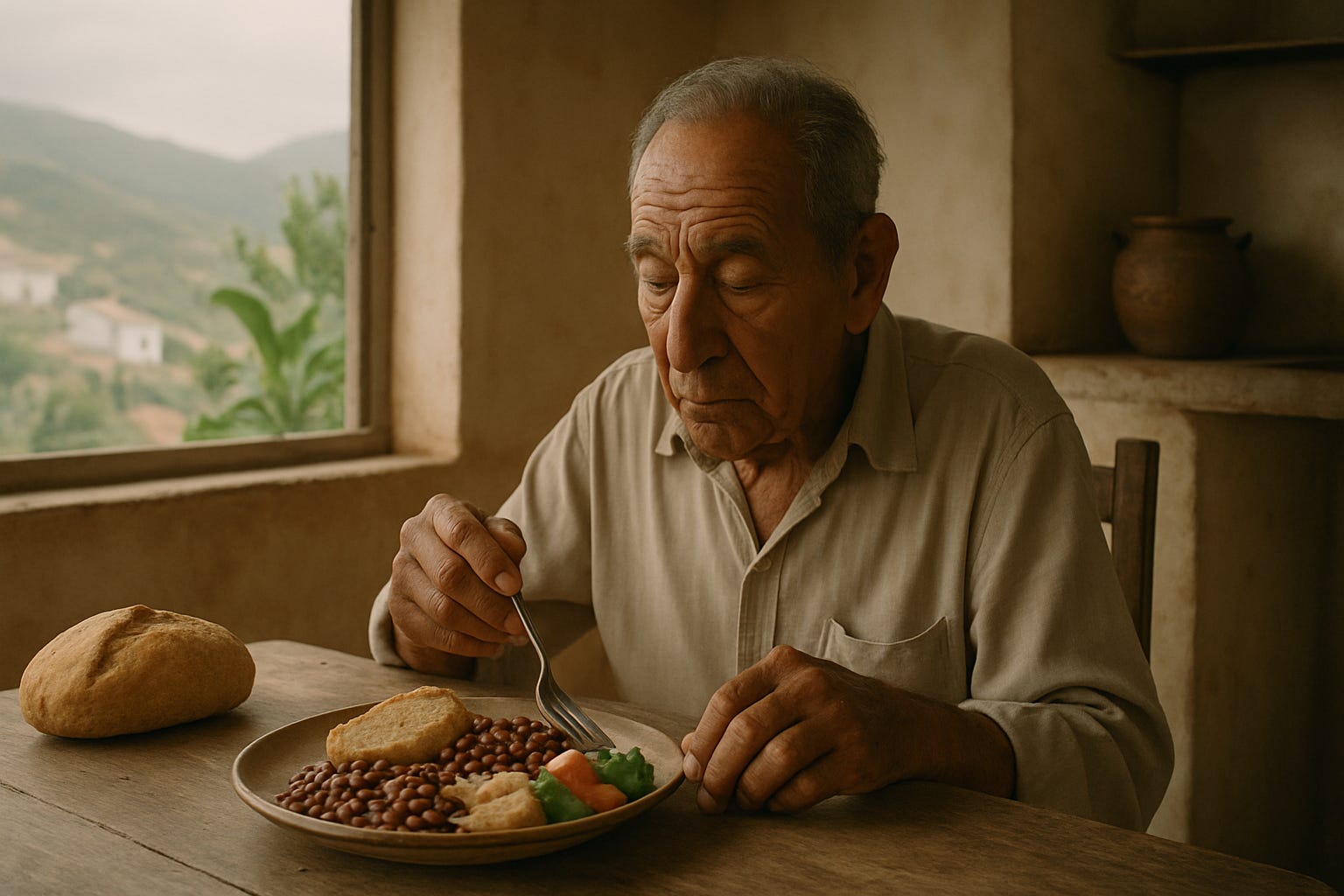
Every few months, some corner of the wellness internet rediscovers the Blue Zones and gets very excited about a $40 supplement stack “inspired by” them. 🙄 That is almost never what is actually on the table. The real story is a lot less flashy and a lot more useful. The regions researcher Dan Buettner and his team identified as having the highest concentrations of centenarians on Earth, including Sardinia, Italy; Okinawa, Japan; the Nicoya Peninsula in Costa Rica; and Ikaria, Greece, mostly eat the same handful of humble foods for lunch, day after day, for decades. 🫘
I went looking for the actual lunch plates, not the marketing copy. What I found is a pattern so simple it is almost boring: beans, bread, vegetables, and a lot less meat than most of us assume. Here is what centenarians in four of these zones actually put on their plate at midday, and why it might be worth stealing for your own lunch break. 🍽️
The Costa Rican lunch plate is basically a bowl of beans wearing a hat
In Nicoya, Costa Rica, lunch is not something you pick at during a video call. It is the casado, which translates to “married man’s plate,” and it is the biggest meal of the day for most Nicoyans. A proper casado stacks rice, black beans, a small portion of fish or meat, a shredded cabbage salad, and a piece of fried plantain onto one plate, and locals have eaten roughly this same combination for lunch for most of their lives. 🫘
Corn and squash round out the rest of the traditional Nicoyan diet, and the corn is almost always processed the old way, soaked and cooked with lime, a step most industrial tortilla makers skip. That process happens to make more of the corn’s nutrients available to the body, according to the Mayo Clinic. 🌽 That is not a small detail. It is the kind of thing that gets lost when a wellness account boils an entire food culture down to “eat more beans.”
What I like about the casado is that nobody in Nicoya is counting macros over this plate. It is just lunch, eaten slowly, usually with family, and often followed by a nap, which honestly sounds like the better system. 😴
A traditional casado usually includes:
Rice, cooked plain
Black beans, stewed with onion and garlic
A small piece of grilled fish, chicken, or occasionally beef
Cabbage or lettuce salad with lime
Fried plantain
Ikarian lunch starts with whatever grows near the house that morning
Ikaria, Greece, does lunch differently: less planning, more foraging. Locals still walk out and gather wild greens like dandelion, nettle, and wild asparagus, cooking them into a dish called horta, dressed simply with olive oil and lemon. 🌿 Researchers cataloguing the Ikarian diet have counted over 150 varieties of wild greens used across the island’s kitchens, a wider vegetable rotation than most American grocery stores stock in a year.
Beans show up too, mostly chickpeas and lentils, cooked into thick stews and eaten alongside sourdough bread that has actually been fermented, not just labeled that way. 🍞 Olive oil is not a garnish here, it is closer to a food group. Locals cook with it, dress salads with it, and use it as a base for nearly every savory dish that reaches the table. Dairy, when it appears, tends to be small amounts of goat or sheep cheese rather than the cow’s milk most Western lunches default to.
Could you get by on a lunch that is almost entirely plants and olive oil? I am not sure I could, honestly, but Ikarians are not doing this as a diet plan. It is simply what is in the garden and the pantry, which might be the actual secret nobody wants to hear because it does not fit neatly into a listicle. 🥗
A typical Ikarian lunch draws from:
Foraged wild greens (horta), stewed or raw
Chickpeas or lentils, slow-cooked
Sourdough or whole-grain bread
A generous pour of olive oil
Herbal tea, often sage or mountain tea, instead of soda
Sardinian shepherds eat soup and bread for lunch, not a protein shake
Sardinia’s Blue Zone sits in the mountainous Barbagia region, where many of the longest-lived men spent their working lives as shepherds, walking miles a day across rocky terrain. 🐑 Their lunch reflects that history: a minestrone-style vegetable and bean soup, thick with whatever vegetables were in season, plus a flatbread called pane carasau that keeps for months without going stale, handy for men who packed lunch and walked for hours.
Cheese does appear, but it is pecorino made from sheep’s milk, eaten in small slices rather than piled onto everything. Locals pair lunch with one or two small glasses of Cannonau wine, a grape grown almost exclusively on the island. 🍷 Cannonau carries notably high levels of flavonoids compared with other reds, according to research in the Journal of the American College of Cardiology, though nobody in Sardinia is drinking it for the antioxidants. They are drinking it because that is lunch.
Here is the part that surprises people: red meat barely shows up. Sardinian centenarians eat meat only a handful of times a month, and when they do, portions run closer to the size of a deck of cards than a dinner plate. 🥩 That is a hard sell for anyone raised on steakhouse portions, myself included, but the pattern holds across the region.
A Sardinian shepherd’s lunch typically includes:
Minestrone-style soup with beans and seasonal vegetables
Pane carasau or another flatbread
A small portion of pecorino cheese
One or two small glasses of Cannonau wine
Rarely, a small serving of meat
Okinawan lunch runs on sweet potato and stopping before you are full
Okinawa’s traditional lunch centers on the purple sweet potato, not rice, which reverses what most people assume about Japanese food. 🍠 A typical plate might include stir-fried vegetables with tofu (a dish locally called champuru), a small amount of fish, and seaweed, all cooked with far less oil and salt than the mainland Japanese diet uses. Meat historically appeared only a few times a month, and pork, when it did, was often boiled for hours to strip out the fat before serving.
The more interesting habit might not be what Okinawans eat but when they stop. The practice is called hara hachi bu, and it means eating until you are about 80 percent full, then putting down the chopsticks. 🥢 Have you ever actually tried stopping there on purpose? A Mayo Clinic gerontologist estimates that combining this single habit with smaller portions and fewer between-meal snacks could cut daily calorie intake by roughly 10 percent without anyone feeling like they are dieting.
I want to flag something here, because it matters: not every claim about Okinawan longevity has held up under scrutiny. Demographer Saul Newman has raised real questions about how reliable some of the record-keeping behind Okinawa’s centenarian numbers actually is, and reporting from The World points out that the region now has higher obesity rates than the rest of Japan. 🤔 That does not erase what the traditional diet looked like decades ago, when today’s oldest residents were building their habits, but it is a fair reminder that a Blue Zone is a research framework, not a magic label. It deserves the same skepticism you would apply to any other health trend.
A traditional Okinawan lunch tends to include:
Purple sweet potato instead of white rice
Stir-fried vegetables and tofu
A small portion of fish, or rarely pork
Seaweed or seaweed-based side dishes
Green tea instead of sugary drinks
How to steal this for your own lunch without moving to a Greek island
You do not need a plane ticket to borrow the pattern here. Every one of these regions leans on the same handful of moves: more beans, more plants, smaller portions, less meat, and a lot less rushing. 🌱 None of that requires a subscription or a supplement, and the Blue Zones project’s own food guidelines boil the whole thing down to a similar short list after reviewing more than 150 dietary surveys.
A few places to start:
Build lunch around a cup of beans or lentils instead of a protein bar
Swap white bread for a real sourdough or whole-grain loaf
Cook with olive oil instead of a seed oil blend
Try eating until you are 80 percent full, then wait ten minutes before deciding on seconds
Save meat for a few times a week instead of every meal 🥩
If you want the fuller picture, we already broke down seven practical longevity lessons pulled from Blue Zones research, and if lunch is the easy part but your evenings are working against you, it is worth checking our list of daily habits that quietly shorten your lifespan too. 📈 For a deeper dive on the research itself, Wikipedia’s overview of the Blue Zones is a solid starting point.
So, what does your lunch actually look like today? If it is closer to a sad desk salad than a casado, you are not alone, and it is probably the easiest habit on this whole list to fix by tomorrow. 🍽️